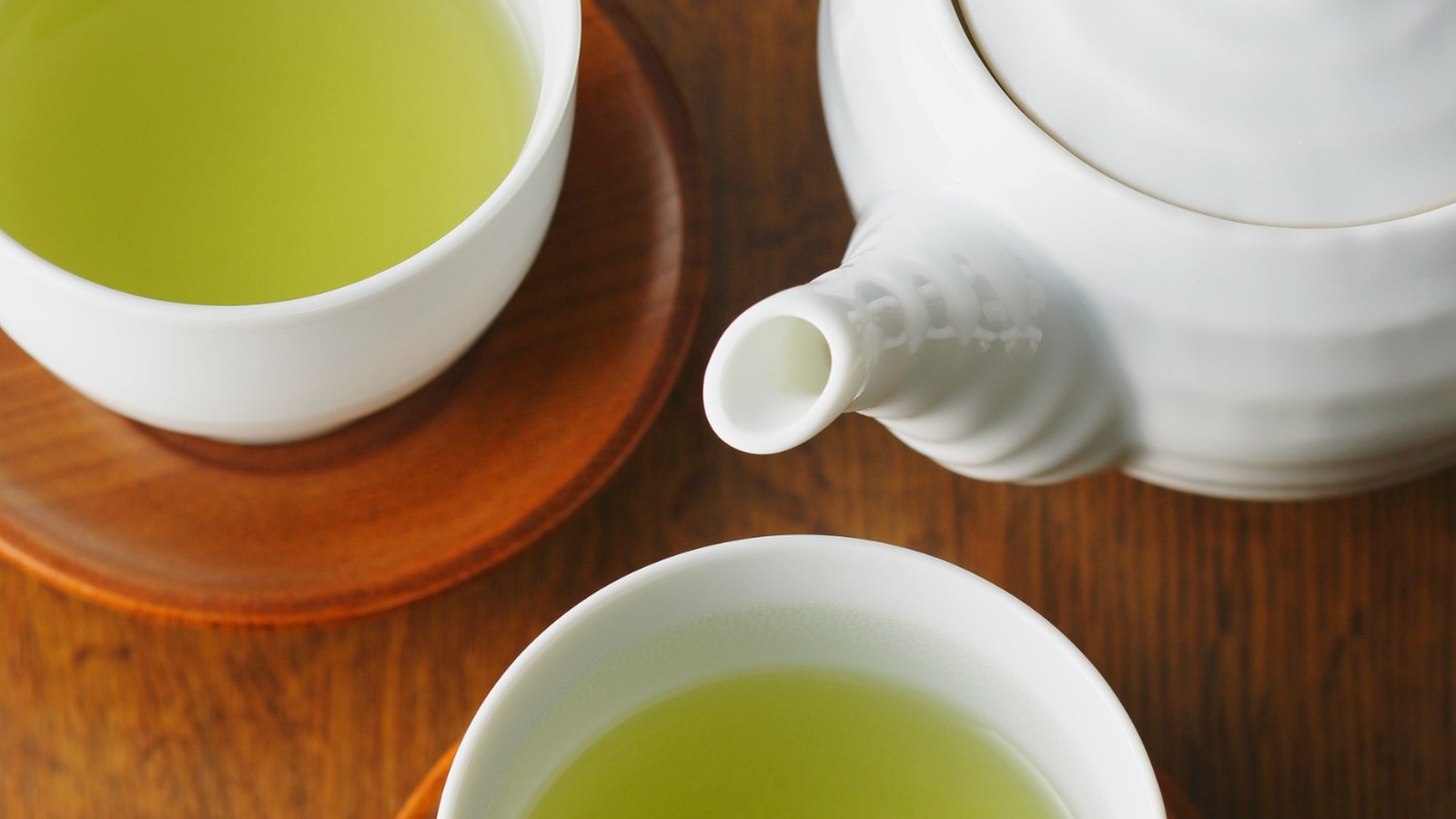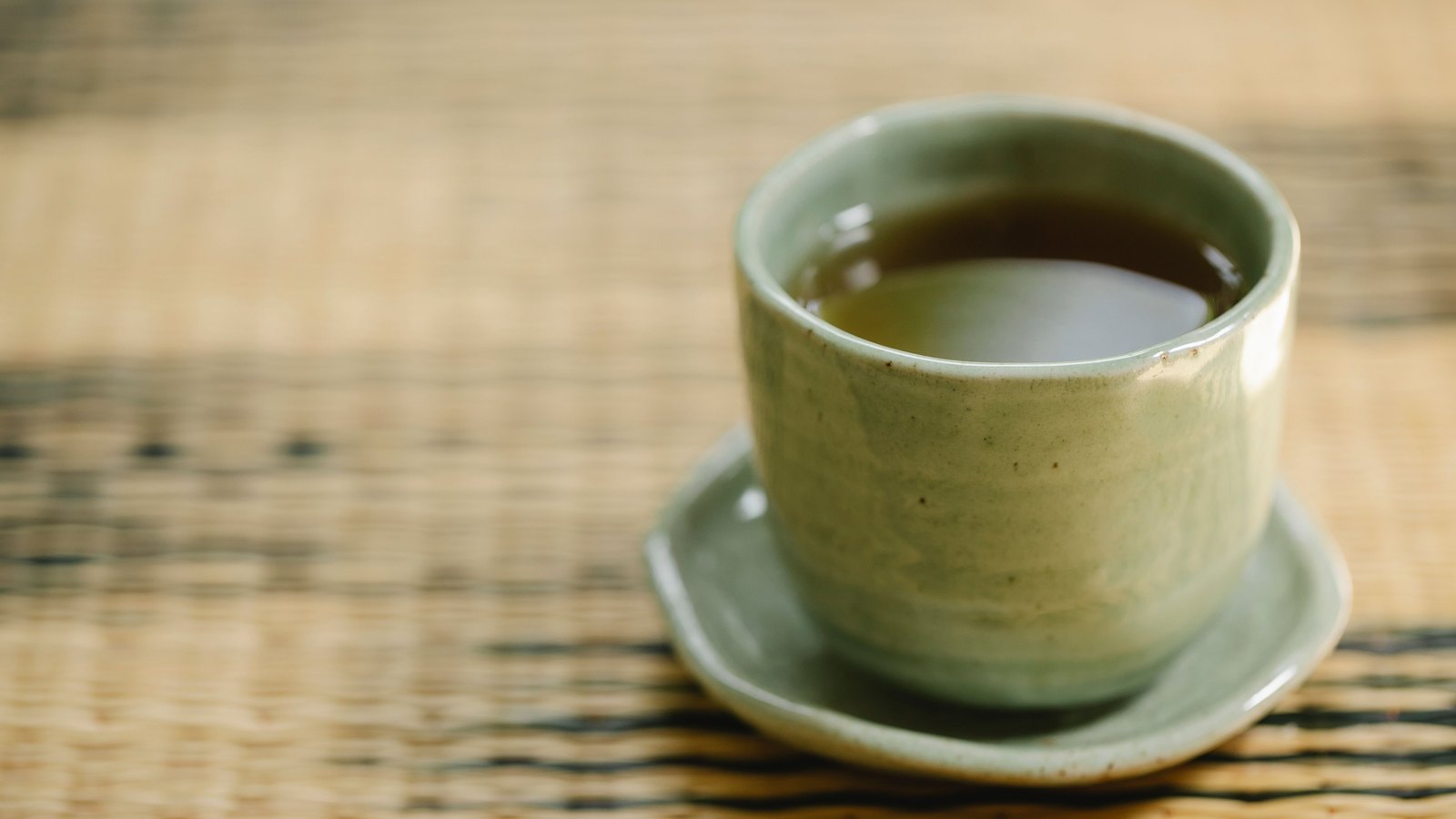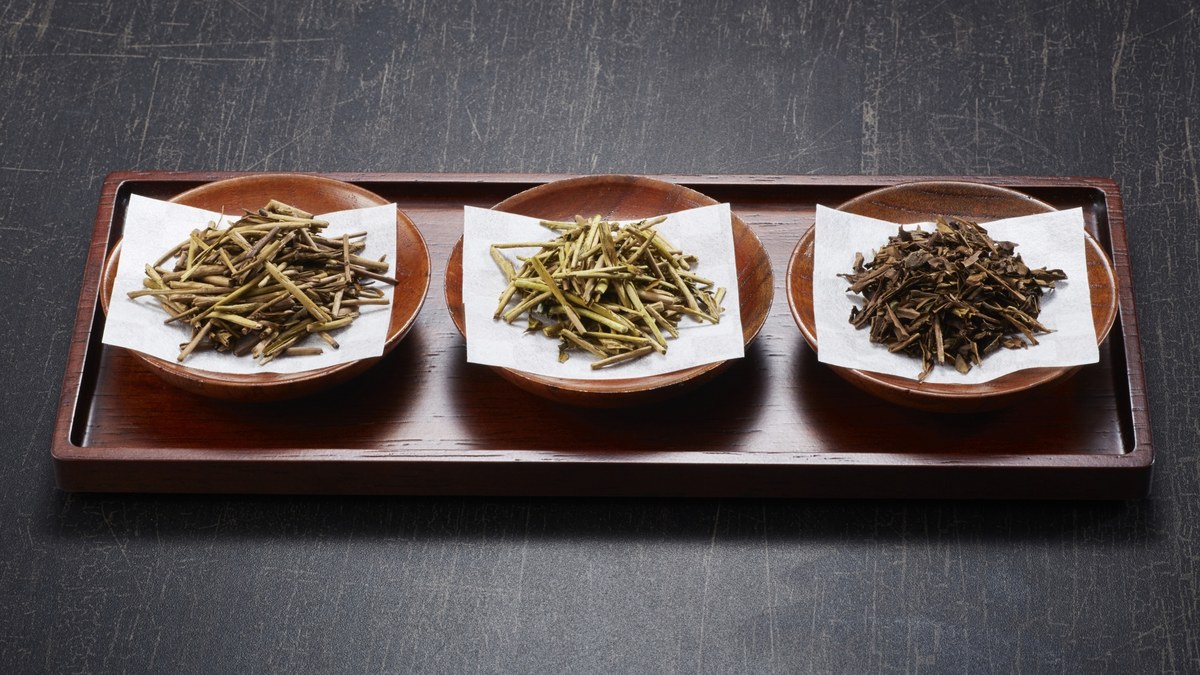
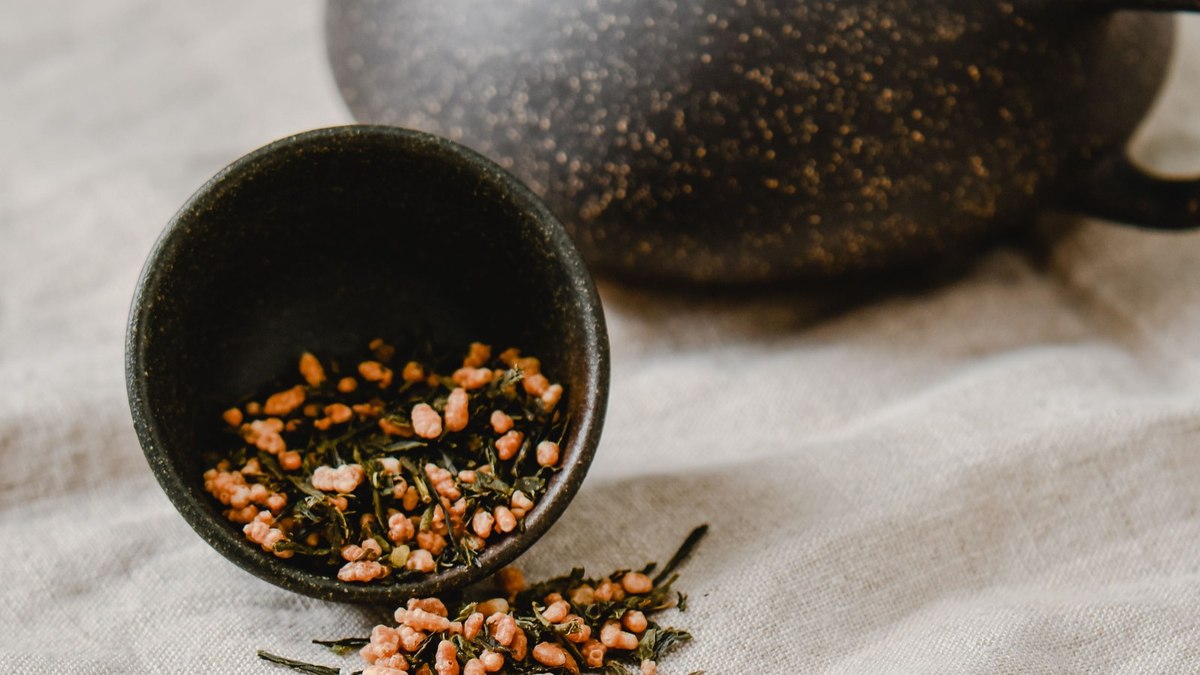
First, what it is. Genmaicha (玄米茶) is Japanese green tea — usually sencha or bancha — blended with roasted brown rice. The roasted rice gives it a toasty, nutty aroma and a mellow, savoury flavour that balances the grassy green tea. Some kernels even pop during roasting, like tiny popcorn, which is why it's affectionately called "popcorn tea." Brewed, it's a light golden cup that smells of toasted grain — warm, easy, and utterly unpretentious.
Its origin is humble and rather touching. Genmaicha appeared in Japan in the 1930s, when pure green tea was expensive; mixing in roasted rice stretched a precious supply further. What began as thrift became beloved in its own right — and that, to me, is part of its quiet charm.
Why Is Genmaicha Good for You? It's Two Foods in One
Here's the simplest way to understand genmaicha's benefits: you're drinking two healthy ingredients at once, and each brings something different to the cup.
From the green tea
The green tea half brings catechins — the family of antioxidants (the best-known is EGCG) linked with supporting heart health and protecting your cells from everyday oxidative stress. It also brings L-theanine, the amino acid behind green tea's calm, focused feeling, which helps take the edge off the caffeine. So even in its green-tea half, genmaicha carries the headline benefits of green tea.
From the roasted brown rice
This is what makes genmaicha more than "weak green tea," and it's the part most people don't know about. Brown rice brings a little fibre (which supports digestion), some B and E vitamins, and two compounds worth naming simply. One is GABA (gamma-aminobutyric acid) — a substance the body uses to calm the nervous system, which adds to genmaicha's relaxing character. The other is gamma-oryzanol, a natural compound in rice bran that researchers have studied in relation to cholesterol and after-meal blood sugar. Don't worry about memorising the names — the point is simply that the rice isn't just filler. It's quietly nutritious.
What the Research Actually Supports
Let me be careful and honest here, the way I try to be about anything health-related — because this is exactly where most genmaicha articles go off the rails. Here is what can reasonably be said.
It may help steady blood sugar after meals. Both halves point the same way: green tea catechins have been studied for improving insulin sensitivity, and brown rice has a lower glycaemic impact than refined grains, with gamma-oryzanol studied for moderating post-meal glucose. This is why a cup of genmaicha with a meal is a time-honoured habit in Japan. Promising — not a treatment for diabetes.
It's gentle on digestion. The roasted rice softens green tea's astringency, and a warm cup after eating is a long-standing Japanese practice for digestive comfort. The modest fibre helps too.
It supports calm. Between L-theanine from the tea and GABA from the rice, genmaicha leans relaxing — one reason it's a fine choice for the evening.
What's Overblown (the Honest Part)
Now the part the breathless articles won't tell you. You'll see genmaicha credited with curing asthma, melting belly fat, preventing cancer, fixing inflammatory bowel disease. Please treat all of that with healthy scepticism. These claims race far ahead of the evidence, and some of what's written online about genmaicha is simply inaccurate. The truth is calmer and more trustworthy: genmaicha is a wholesome, low-calorie, low-caffeine daily drink whose gentle benefits come from real food. That's wonderful — and it's enough. It doesn't need to be a miracle to be worth drinking every day.
An Acupuncturist's View: Genmaicha and the "Spleen and Stomach"
Here's where I can offer you something no ordinary tea article can — the view from my own field. In the East Asian medicine I practise, digestion isn't a side issue; it's close to the centre of everything. And genmaicha fits that picture beautifully.
In this tradition, the digestive system is called the "Spleen and Stomach" (脾胃) — and it means something broader than the Western organs of the same name. Think of it as the body's kitchen: the Stomach receives food and "ripens" it (the old texts call the stomach the "sea of grain and water"), and the Spleen then extracts the refined essence from that food and turns it into qi and blood — the energy and nourishment that power the whole body. Because all of this happens after birth, from what we eat and drink, this system is honoured with a beautiful title: the "Root of Postnatal Life" (後天の本). In plain terms: it's the factory that turns food into the fuel you run on.
This reframes what "easy on the stomach" really means. In my tradition, protecting your digestion isn't about mere comfort — it's about protecting the very source of your daily energy. If the "kitchen" is overtaxed, even the finest food won't fully become qi and blood. So a drink that supports digestion is supporting something foundational.
And this is exactly where genmaicha earns its place. A few principles from my field:
Warm drinks support the kitchen's fire. Cold drinks are thought to burden the Spleen and Stomach, dampening that digestive "fire," while warm ones support it. A warm cup of genmaicha is kind to the system in this view.
Roasted grain is gentle and grounding. Plain green tea is considered slightly cooling in nature — refreshing, but a little harsh on a delicate stomach. The roasted brown rice in genmaicha brings a warm, toasty, grounding quality that softens that coolness. In other words, genmaicha is green tea made kinder to your digestion — which is why I so often reach for it over straight sencha when the stomach needs care.
A cup after meals is quiet wisdom. The Japanese habit of a warm cup after eating isn't only pleasant; from my perspective it gently supports the work of transformation the body is doing right after a meal. In my practice, for people with tired or sensitive digestion, this is exactly the kind of small, daily, nourishing habit I encourage — and genmaicha is one of the teas I most often suggest.
I'll hold the same honest line here as everywhere: this is the language and logic of a centuries-old tradition, not a claim of clinical proof. But these ideas have guided care for a very long time, and they line up remarkably well with what genmaicha simply is — a warm, gentle, grounding cup. When I drink it between treatments, I'm not thinking about antioxidants. I'm thinking that I'm being kind to the root of my own energy.
Low Caffeine: Who Can Drink It, and When
One of genmaicha's best practical qualities is how little caffeine it has. Because roughly half the blend is rice, it carries notably less caffeine than pure green tea — often around 10–20mg a cup, a fraction of a coffee. That makes it wonderfully flexible: you can drink it in the evening without it disturbing sleep, it's gentle enough for those sensitive to caffeine, and in Japan it's a tea traditionally offered to children and the elderly. If you're pregnant, its low caffeine makes it an easy choice within the usual guidance to stay under 200mg of caffeine a day — though, as always, check with your doctor. (If you'd like the full picture of how the teas compare, see our complete guide to caffeine in Japanese tea.)
What Does It Taste Like — and What to Eat With It
This is genmaicha's real charm. Picture the fresh, grassy character of green tea wrapped in the warm aroma of toasted rice — a little like popcorn or freshly toasted grain. It's mellow, savoury rather than bitter, and very smooth. Because it leans nutty and savoury, it pairs beautifully with savoury food — rice crackers, toast, sesame snacks, even a simple meal — rather than the sweets you'd serve with a brisker green tea. It's the tea I'd hand to anyone who says they "don't like green tea." It tends to win them over.
How to Brew Genmaicha
Happily, it's one of the most forgiving Japanese teas to brew — no skill or anxiety required. Use about 5g (a tablespoon) per 200ml of water. Use hot but not boiling water, around 80–90°C; the roasted rice makes it far more tolerant of heat than delicate sencha, so don't fuss. Steep for just 60–90 seconds, then pour out completely, down to the last drop. It re-steeps happily two or three times. That's it.
Frequently Asked Questions
Does genmaicha have caffeine?
Yes, but very little — usually around 10–20mg per cup, since roughly half the blend is caffeine-free roasted rice. That's a fraction of a cup of coffee, which makes genmaicha easy to drink in the evening or for anyone sensitive to caffeine.
Can I drink genmaicha every day?
Yes. In Japan it's an everyday tea, drunk throughout the day by people of all ages. It's low in caffeine, calorie-free, and gentle on the stomach, so a few cups a day suits most people comfortably.
Is genmaicha safe during pregnancy?
Its low caffeine makes genmaicha one of the easier teas to enjoy within the usual pregnancy guidance of staying under 200mg of caffeine a day from all sources. As individual needs vary, it's best to confirm with your doctor.
Does genmaicha help with weight loss?
Only modestly, and only as part of a healthy lifestyle. It's calorie-free and a good replacement for sugary drinks, and green tea may give metabolism a small nudge — but it's not a fat-burning shortcut. Treat dramatic weight-loss claims with caution.
Is genmaicha the same as genmai matcha?
Almost — genmai matcha is ordinary genmaicha with a dusting of matcha powder added. It keeps the toasty comfort but adds a deeper green colour, fuller body, and a gentle lift. A lovely richer version.
Why I Love It
Genmaicha is the tea of everyday life in Japan — not the ceremonial showpiece, but the warm cup on the kitchen table, poured for family at any hour. There's a quiet wisdom in it: born of thrift, gentle on the body, nourishing without asking anything of you. It doesn't dazzle. It simply makes an ordinary moment a little warmer and a little healthier. To me, that's the best kind of benefit there is — and the one most likely to last a lifetime.