How Much Caffeine Is in Hojicha?
Let's be honest about the number, because there are actually two of them — and most guides only tell you one. Many Western tea sites quote around 7–15mg per cup. But Japan's own Standard Tables of Food Composition (the official government reference) list brewed hojicha at about 20mg per 100ml — roughly 30mg in a typical 150ml cup. So which is true? Both are, depending on the leaf and how you brew it. The very low figures usually reflect stem-based (kuki) hojicha, short steeps, or cold brew; the official ~30mg figure reflects a standard hot brew of leaf hojicha.
Either way, the honest headline holds: hojicha is low — but not as low as the internet often claims, and never zero. Even at the higher 30mg, it's well under a cup of coffee (~95mg) and a fraction of matcha. It's gentle, just not magically caffeine-free.
| Drink | Caffeine (approx.) |
|---|---|
| Coffee | ~60mg per 100ml (~95mg a cup) |
| Gyokuro | ~160mg per 100ml (high) |
| Matcha | ~60–70mg per bowl (whole leaf) |
| Sencha | ~20mg per 100ml |
| Hojicha | ~20mg per 100ml (~30mg a cup)* |
| Genmaicha | ~10mg per 100ml |
*Figures from Japan's MEXT Standard Tables of Food Composition (8th ed.). Stem-based hojicha, short steeps and cold brew can run considerably lower (the "7–15mg" you often see). Figures vary with leaf, water temperature and steeping time, so treat them as honest ranges, not lab certainties.
Here's the detail that surprises even tea lovers: by the official tables, sencha and hojicha are listed at the same ~20mg per 100ml. So if they're equal on paper, why is hojicha always the one called "low-caffeine"? That's the real question — and the answer isn't quite what most articles tell you.
Why Is Hojicha So Low in Caffeine? The Honest Answer
You'll read everywhere that "roasting burns off the caffeine." It's a tidy story — and it's only partly true. Let me give you the accurate version, because the real reason is more interesting.
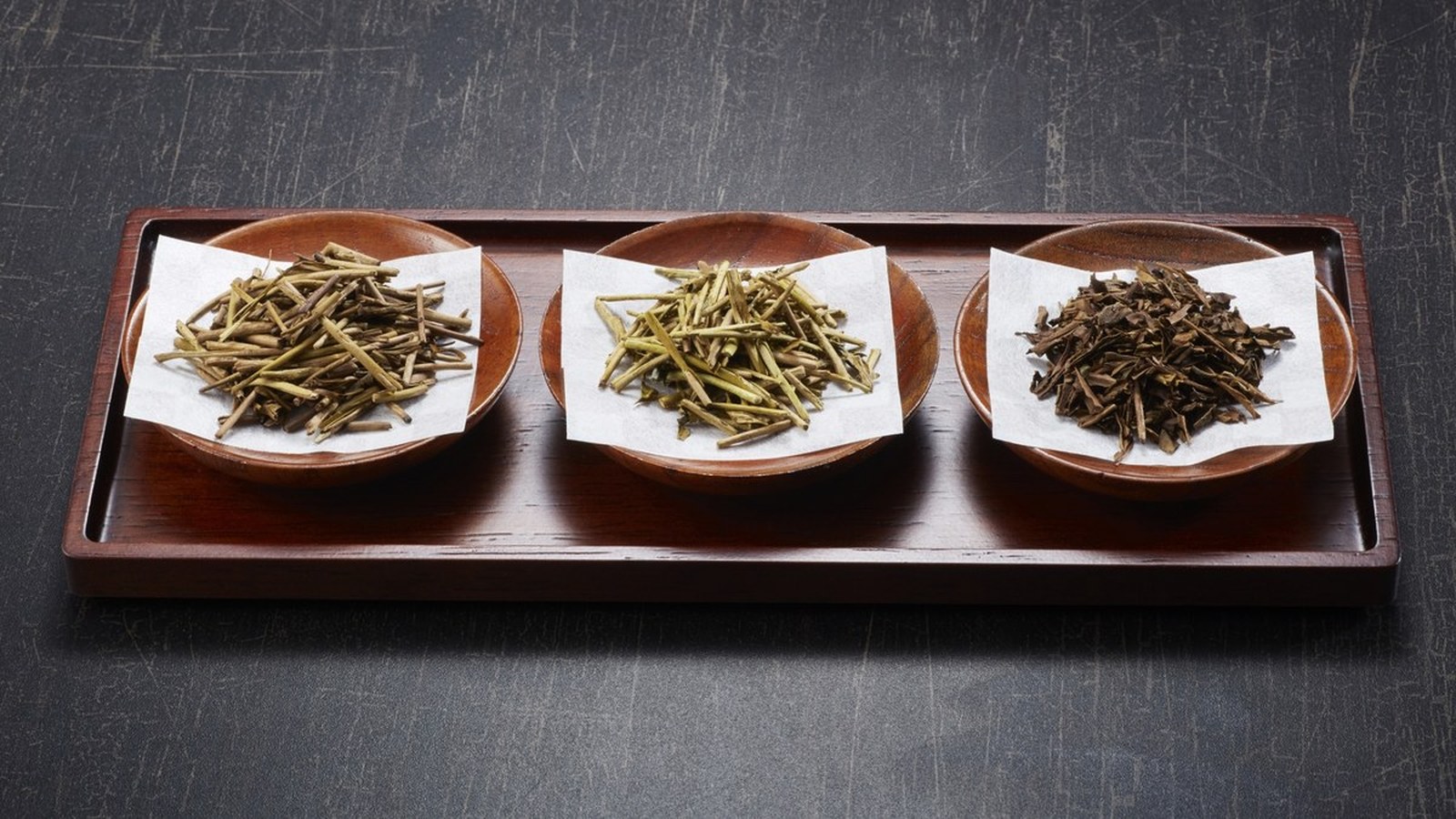
The main reason is the leaf, not the fire. Hojicha is usually made from more mature leaves and stems — often bancha (later-harvest leaf) or kuki (stems) — rather than the tender young buds used for sencha and matcha. Caffeine concentrates in the youngest, fastest-growing parts of the plant, so hojicha starts from material that's naturally lower in caffeine. Stem-heavy kuki-hojicha is the lowest of all. This — the part of the plant used — is the biggest lever.
And the roasting? Its role is smaller than the myth suggests. Yes, caffeine sublimates (turns to vapour) at around 178°C, and hojicha is roasted hotter, around 200–220°C. But roasting is brief, and in practice it does not drive off most of the caffeine — if it did, the official tables wouldn't still list hojicha at ~20mg. What roasting really does is transform the flavour: it burns away the bitter, astringent edge and builds that toasty aroma, so the cup tastes and feels gentler even though meaningful caffeine remains. In fact, because hojicha is usually brewed with very hot water, caffeine can extract quite readily.
An Acupuncturist's View: Caffeine and the Nervous System
Here's where my own field comes in, because caffeine is really a story about the nervous system, and that's territory I work in every day. Caffeine stimulates the sympathetic side of your nervous system — the "go," fight-or-flight gear that raises alertness, heart rate and tension. That's wonderful at 8am and a problem at 8pm. Most of the people who come to my clinic are stuck in that "go" gear and can't find their way back down to "rest."
What makes hojicha special is that it does the opposite of most caffeinated drinks. Its caffeine is so low that it barely nudges the sympathetic system — and at the same time, its roasted aroma actively encourages the parasympathetic ("rest and recover") side. Japanese research has found that simply inhaling hojicha's toasty scent can shift the body toward that calming state, with measurable changes like a rise in skin temperature. So you get a drink that calms more than it stimulates. That's rare, and it's why I reach for it in the evening.
When someone tells me green tea or coffee keeps them up at night, hojicha is almost always my first suggestion. It lets them keep the ritual — the warmth, the pause, the cup in two hands — without the chemical that's wrecking their sleep. I think of caffeine as a dial, not a switch. You don't have to choose between "all the buzz" and "nothing at all." Hojicha sits near the quiet end of that dial: enough warmth and presence to feel like a real tea, not enough caffeine to rob you of rest. For an over-revved nervous system, that's not a small thing. It's a doorway back to "off."
Can You Drink Hojicha at Night?
Yes — and this is exactly what hojicha is for. In Japan, it's the tea traditionally served after dinner, to children, and to the elderly, precisely because it won't disturb sleep. If you're caffeine-sensitive, the small amount in hojicha is very unlikely to keep you awake, especially if you steep it briefly. If you want to be extra cautious, a shorter steep pulls out a little less caffeine. For genuinely zero caffeine, though, you'd need to step outside true tea entirely — to a herbal tisane like mugicha (roasted barley) or sobacha (buckwheat), which contain none at all.
Hojicha Caffeine vs Coffee, Sencha, and Matcha
If you're switching to hojicha to cut caffeine, here's the honest picture — and it's a little different from the usual claims. Against coffee, a cup of hojicha gives you roughly a third of the caffeine (about 30mg vs ~95mg) — a real, worthwhile drop, even if it's not the "tenth" some sites claim. Against sencha, here's the surprise: by Japan's official tables they're actually similar, both around 20mg per 100ml. Hojicha's reputation as the gentler cup comes less from a lower number and more from the part of the plant used (mature leaf and stems) and from how mellow the roast makes it feel. Against matcha, the gap is large and real, because with matcha you drink the whole powdered leaf and take in all its caffeine at once. So hojicha is still a sensible step down — just be clear-eyed about why. For the full ranking of every Japanese tea by caffeine, see my complete guide below.
Want the complete caffeine ranking across every Japanese tea — matcha, gyokuro, sencha, genmaicha, bocha and more, with the science of each?
Caffeine in Japanese Tea: The Complete Guide →Frequently Asked Questions
Does hojicha have caffeine?
Yes. By Japan's official food-composition tables, brewed hojicha has about 20mg of caffeine per 100ml — roughly 30mg in a standard cup. Some stem-based or cold-brewed hojicha runs lower (the "7–15mg" often quoted). It comes from the same plant as all green tea, so it's never truly caffeine-free.
Is hojicha caffeine free?
No. No true green tea is completely caffeine-free, because they all come from Camellia sinensis. Hojicha is lower than coffee — about a third per cup — but not zero. For genuinely zero caffeine you'd need a herbal tisane like mugicha (barley) or sobacha (buckwheat).
Does roasting remove the caffeine?
Less than people think. It's often said roasting "burns off" the caffeine because caffeine vaporises near 178°C and hojicha is roasted hotter — but the roast is brief, and official figures show meaningful caffeine remains. Hojicha's gentleness comes mostly from the mature leaves and stems it's made from; roasting mainly changes the flavour, not the caffeine.
Can I drink hojicha before bed?
For most people, yes. A cup is well under a coffee, and the roasted aroma is calming, so it rarely disturbs sleep — it's the classic Japanese after-dinner tea. If you're highly caffeine-sensitive, choose stem-based kuki-hojicha, a short steep, or cold brew, which all lower the caffeine further.
Which has less caffeine, hojicha or sencha?
This surprises people: by the official tables they're similar, both around 20mg per 100ml. Hojicha is called the "gentle" one mainly because of the mature leaf and stems it uses and how mild the roast makes it taste — not because the number is dramatically lower.