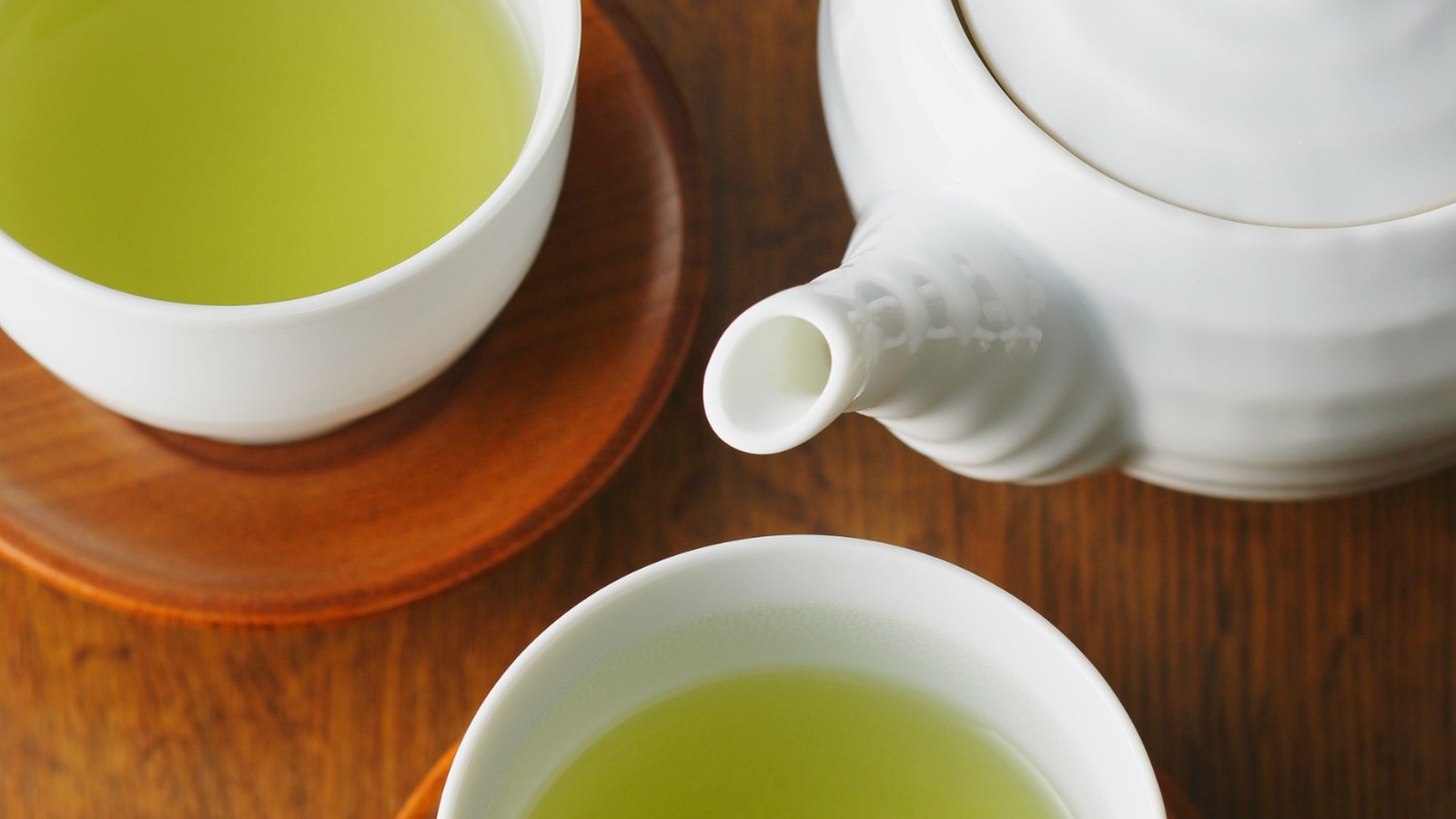
Let's answer the core question first, plainly. Yes — green tea contains caffeine. So do matcha, sencha, gyokuro, hojicha and nearly every Japanese tea, because they all come from the same plant, Camellia sinensis, which makes caffeine naturally. The only truly caffeine-free "teas" are the ones that aren't really tea at all — herbal infusions like sobacha (buckwheat) or mugicha (barley). So the question worth asking isn't whether there's caffeine. It's how much — and there, Japanese teas differ enormously.
How Much Caffeine? Every Japanese Tea, Compared
Here is the whole family side by side, next to a cup of coffee, with a note on when each one suits. These are typical figures for a normal cup; your exact number shifts with how you brew (more on that shortly).
| Drink | Caffeine / cup | Best time to drink |
|---|---|---|
| Gyokuro (shaded green) | ~120–160 mg | Morning — the strongest tea of all |
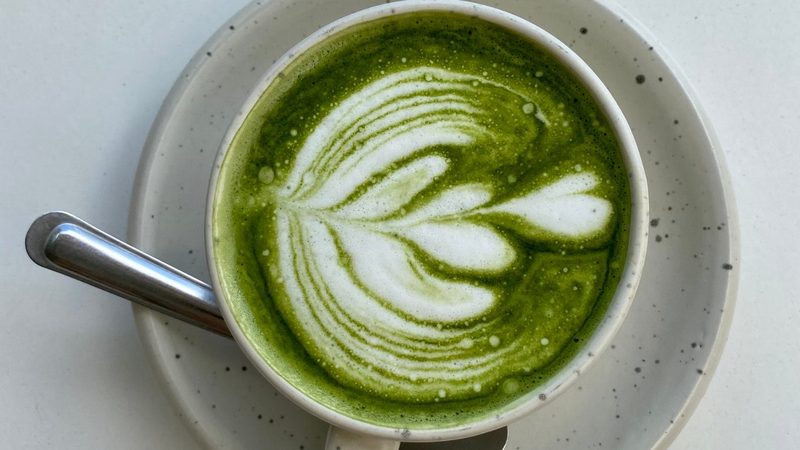
| Matcha (2g, whisked) | ~60–80 mg | Morning or early afternoon |
| Sencha (everyday green) | ~30–40 mg | Daytime, all-rounder |
| Genmaicha (with rice) | ~10–20 mg | Anytime, gentle |
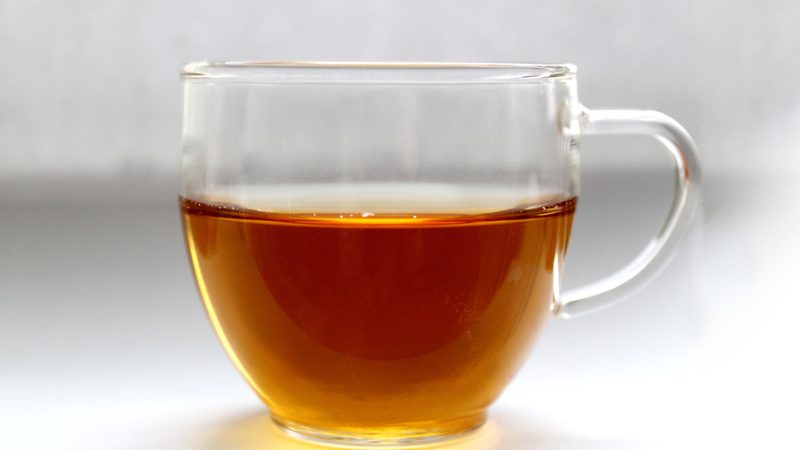
| Hojicha (roasted) | ~7–15 mg | Evening — low enough for night |
| Bocha / Kukicha (stems) | ~7–15 mg | Evening — lowest true tea |
| Brewed coffee | ~80–110 mg | — |
Typical ranges per standard cup; brewing strength changes them. Sources broadly agree on these bands.
Why Do the Numbers Vary So Wildly?
Look at that chart and a fair question follows: if it's all the same plant, why does gyokuro have twenty times the caffeine of hojicha? Three simple things explain almost all of it.
1. Whether you drink the leaf, or just steep it. With sencha or gyokuro, you steep the leaves and pour off the liquid — so you only drink what dissolves out. With matcha, the leaf is ground to powder and you swallow the whole thing, dissolved in the cup. Nothing is left behind. That's why matcha, gram for gram a milder leaf than gyokuro, still hits hard — you're drinking 100% of it, not an extraction.
2. Whether the plant grew in sun or shade. Here's the surprise that explains gyokuro. Shading the tea plant for weeks before harvest makes it produce more caffeine (and more of the amino acid we'll meet in a moment). Gyokuro and matcha are both shade-grown — which is exactly why gyokuro tops the entire chart, and why both taste so intensely of savoury umami. Sun-grown sencha, by contrast, is more moderate.
3. Which part of the plant — and, to a lesser extent, roasting. The roasted teas — hojicha, bocha — sit toward the bottom mainly because of what they're made from: later harvests, stems and twigs rather than young buds, all naturally lower in caffeine (stem-based kuki-hojicha is the gentlest of all). Roasting helps a little and makes the cup taste far milder, but it's often overstated — by Japan's official tables, brewed hojicha still sits near sencha at about 20mg per 100ml. So these are low-ish, evening-friendly teas because of the leaf and the gentle roasted character, not because the fire "removes" the caffeine.
Why Tea's Caffeine Feels So Different From Coffee's
This is the part I find most fascinating, and the part almost no other guide explains — so let me, because it's where my work with the body actually helps. Many people tell me coffee makes them anxious and shaky, while tea — even fairly strong tea — gives them a calm, clear alertness. Some can drink green tea in the evening and sleep perfectly, yet a coffee at the same hour keeps them awake half the night. So is the caffeine in tea somehow different from the caffeine in coffee? Here's the surprising answer.
First surprise: the caffeine is exactly the same molecule. You may have heard tea's caffeine called "theine," as if it were a gentler cousin. It isn't. When it was first found in tea in the 1800s it was named theine — until chemists realised it was identical to the caffeine in coffee. Same molecule, atom for atom. So the difference you feel can't be the caffeine itself.
What caffeine does. As you go through your day, a substance called adenosine slowly builds up in your brain and makes you feel drowsy — think of it as the body's "you're getting tired" signal. Caffeine works by blocking that signal: it slips into the same docking points adenosine would use, so the tiredness message never lands. You don't gain energy, exactly — you just stop feeling the fatigue. That's true whether it comes from coffee or tea.
The real difference: how fast it arrives. Here's the key. In coffee, caffeine hits your bloodstream quickly and all at once — a sharp spike, the familiar "jolt," followed often by a crash. In tea, two other compounds — the amino acid L-theanine and tea's natural tannins — bind to the caffeine and slow how fast your gut absorbs it. So the very same molecule is released into your blood and brain gradually, over a longer, gentler curve. Picture it like this: coffee is a sharp peak, tea is a rolling hill. Same total height, completely different ride. That slower, lower curve is why tea gives sustained, calm focus instead of a spike — and why a cup in the evening is far less likely to ambush your sleep.
And L-theanine does more than slow things down. Research suggests it actively promotes a state of calm focus, and that alongside caffeine it smooths the sharp edges further — easing the agitation, steadying the energy. Caffeine and L-theanine together produce something neither makes alone: alertness without the jitters. The shade-grown teas, gyokuro and matcha, are especially rich in L-theanine — which is why a strong matcha can still feel serene rather than frantic.
Why your friend reacts differently to you. If you've noticed that the same cup affects you and someone else completely differently, you're not imagining it. How quickly each of us breaks caffeine down is partly genetic — some people are naturally fast metabolisers, others slow. So "I can drink green tea at night but never coffee" is a perfectly real, physical thing, not a quirk of the mind. Your own experience is the best guide to what your body does with caffeine — trust it.
I'll be honest, because it matters more than a tidy story: L-theanine is an active area of research, not a closed case, and bodies vary. But it lines up with what people describe again and again, and with what I see in my own practice. Tea's gift isn't only a smaller dose. It's caffeine arriving in a different shape — a hill, not a spike.
Another Lens: How East Asian Medicine Sees Tea's Energy
Everything above is the Western, molecular view — caffeine, receptors, absorption curves. But I was trained in another tradition too, and it looks at the very same cup through a completely different lens. I think holding both is what makes tea so fascinating, so let me show you the second view. (You won't find this in most caffeine guides.)
Where Western science asks "what molecule is this and what does it do," East Asian medicine asks "what does this drink do to the body's energy." In that tradition, tea's stimulating, wakefulness-giving quality is understood as helping to move qi — the vital energy that flows through the body. When qi moves freely, the fog lifts, the mind sharpens, fatigue recedes. That's the same alertness the West credits to caffeine, simply described in the language of energy rather than chemistry. For centuries, green tea was used in this tradition precisely for headaches and tiredness.
But there's a crucial second half — and this is the part the modern world forgets. In this tradition, green tea is considered cooling in nature (classified as "bitter, sweet, and cool"). A little cools excess heat — wonderful for a feverish, overheated, inflamed state. But here's the key idea: stimulation isn't free. Moving qi by stimulation draws on the body's deeper reserves — what the tradition calls yin (the cooling, moistening, restful aspect) and the body's fluids. Drink too much, too strong, too often, and you don't gain energy — you borrow it, spending down your reserves. That dry mouth, that wired-but-depleted, slightly hollow feeling after too much coffee? The old framework names it plainly: you've consumed your fluids and worn at your yin.
Notice how neatly this maps onto the Western picture. The molecular view says coffee gives a sharp spike and a crash; the energetic view says over-stimulation borrows against your reserves and leaves you depleted. Two languages, the same truth. And it explains why the answer was never "more caffeine" or "no caffeine," but balance — what this tradition calls keeping qi, blood, and fluids in harmony. Tea, taken with respect for the right amount and your own constitution, helps move qi without draining you. Taken heedlessly, it costs you.
This view even explains the roasted teas from another angle. Roasting warms green tea's cool nature, making hojicha and bocha gentler and less depleting on the body — which sits beside the Western picture of why they feel so easy in the evening: not because the fire strips out the caffeine (it largely doesn't), but because the mature leaves and stems used are naturally low in it, and the roast makes the cup taste and feel mellow. Both lenses point to the same gentle cup for the evening.
As always, I'll be honest about what this is: the language and logic of a tradition thousands of years old, not a claim of laboratory proof. But I find that the two views don't compete — they illuminate each other. The West tells you precisely what is happening in your cells; the East tells you how to live with it wisely. And both, in the end, give the same counsel: respect the dose, know your own body, and let tea move your energy without spending what you can't spare.
You Control More Than You Think: Brewing
The chart gives typical numbers, but you're not stuck with them. Three levers change how much caffeine ends up in your cup.
Temperature. Caffeine dissolves faster in hot water. Brew sencha with near-boiling water and you'll pull out more caffeine (and more bitterness); brew it cooler, around 70°C, and you get a gentler, sweeter, lower-caffeine cup. This is one reason the Japanese brew fine green teas cool.
Time. Longer steeping extracts more caffeine. A quick 30–60 second steep is milder than letting the leaves sit for several minutes.
Cold brew. Steeping leaves in cold water for a few hours pulls out very little caffeine while still drawing out sweetness and umami. A cold-brewed sencha or hojicha is one of the lowest-caffeine ways to enjoy green tea — ideal for a hot afternoon, or the evening, when you want the flavour but not the lift.
Which Tea Should You Choose? (By Situation)
Numbers are only useful if they help you decide. So here's the shortcut — find yourself in the list.
Frequently Asked Questions
Is hojicha caffeine free?
No, though it's lower than coffee. By Japan's official tables, brewed hojicha sits around 20 mg per 100 ml — about 30 mg a cup, near sencha's level — with stem-based or cold-brewed versions lower (the "7–15 mg" often quoted). It's gentle mainly because of the mature leaves and stems used; roasting changes the flavour more than the caffeine. For genuinely caffeine-free, choose a herbal tisane like sobacha (buckwheat) or mugicha (barley).
Which Japanese tea has the most caffeine?
Gyokuro. Because it's shade-grown, it produces more caffeine than any other Japanese tea — often 120–160 mg per cup, more than a cup of coffee. Matcha is next, at roughly an espresso's worth.
Does green tea have more or less caffeine than coffee?
Less, in almost every case. A typical cup of brewed coffee has about 80–110 mg; everyday sencha has around 30–40 mg, roughly a third. The exception is gyokuro, which can match or exceed coffee.
Can I drink green tea in the evening?
Yes, if you choose wisely. Skip matcha and gyokuro at night, but hojicha, bocha and genmaicha are low enough in caffeine to enjoy after dinner. Brewing cooler and for a shorter time, or cold-brewing, lowers the caffeine even more.
Is there a decaf Japanese green tea?
Decaffeinated green tea does exist, but it's uncommon in fine Japanese tea, and the decaffeination process can dull some flavour and reduce antioxidants. For most people, simply choosing a naturally low-caffeine tea like hojicha is the better, tastier route.
Is the caffeine in tea different from the caffeine in coffee?
The molecule is exactly the same — "theine" was an old name for it before chemists realised it was identical to coffee's caffeine. What differs is the delivery: L-theanine and tannins in tea slow how fast the caffeine is absorbed, so it arrives as a gentle, sustained rise rather than coffee's sharp spike. That's why the same amount can feel calmer in tea, and why many people sleep fine after evening green tea but not after coffee.
Why does caffeine affect me differently than other people?
How fast you break caffeine down is partly genetic — some people are naturally quick metabolisers, others slow. That's why one person sleeps soundly after an evening cup while another lies awake. Your own experience is the most reliable guide to what your body does with caffeine.
What does East Asian medicine say about tea and caffeine?
In that tradition, tea's stimulating quality is seen as helping to "move qi" (vital energy) — lifting fatigue and sharpening the mind. But green tea is considered cooling in nature, and over-stimulation is thought to draw down the body's yin and fluids, leaving you depleted rather than energised. The guidance is balance: enjoy tea in the right amount for your constitution. It's a traditional framework, not a claim of clinical proof — but it maps strikingly onto the modern picture of caffeine's spike and crash.
One Plant, a Cup for Every Hour
That, in the end, is the quiet genius of Japanese tea. From a single plant comes a whole spectrum — a powerful gyokuro to sharpen a morning, an easy sencha for the working day, a gentle hojicha to close the evening in peace. You're never choosing between "caffeine" and "no caffeine." You're choosing the cup that fits the hour and your own body. Match the tea to the moment, and tea will give you exactly the kind of energy — or the kind of calm — that the moment calls for.