The Café that lives within Restaurants
Before the restaurant even opens for dinner, ASANO has already served its last cup. Kate walks us through how hand-whisked matcha and coffee fit into someone else's dining room every morning. “Regulars will tell you it’s the best matcha in the West Village and the Upper East Side, and the only one built entirely inside somebody else’s dining room,” she told me. It is a confident thing to say, and the care underneath it is what the rest of this page is about.
What they pour
- Region
- 静岡県 森町Morimachi, Shizuoka — along the Ōta river
- Grower
- 長田製茶Osada Tea, founded 1948 — third generation
- Cultivar
- さえあかり × さえみどりSaeakari and Saemidori, blended by the grower
- Bowl
- 4g → 50gSifted, hand-whisked, at 165°F / 74°C
- Hours
- Mornings onlyThe room is a restaurant by evening
Sifting the powder and whisking it by hand are steps a machine can do faster. Doing them by hand is 手間暇 — the time and trouble taken — and that is where wa lives. What I think Japan built around matcha over four centuries is not a recipe, but a willingness to spend effort on the part nobody will see.
How an empty dining room turned into a morning café.
Walk past a restaurant at nine in the morning and it is dark. The chairs are up, the kitchen is cold, the lease is being paid anyway. Most people see nothing. Kate saw a shop that already existed and simply wasn't open yet.
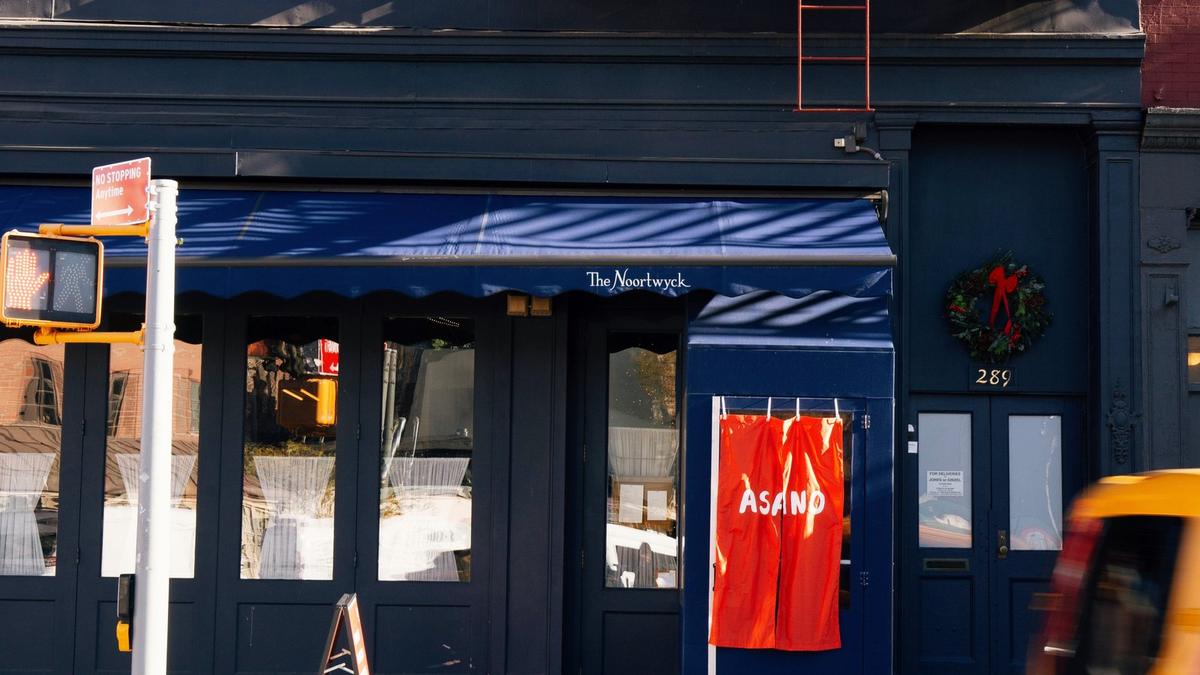
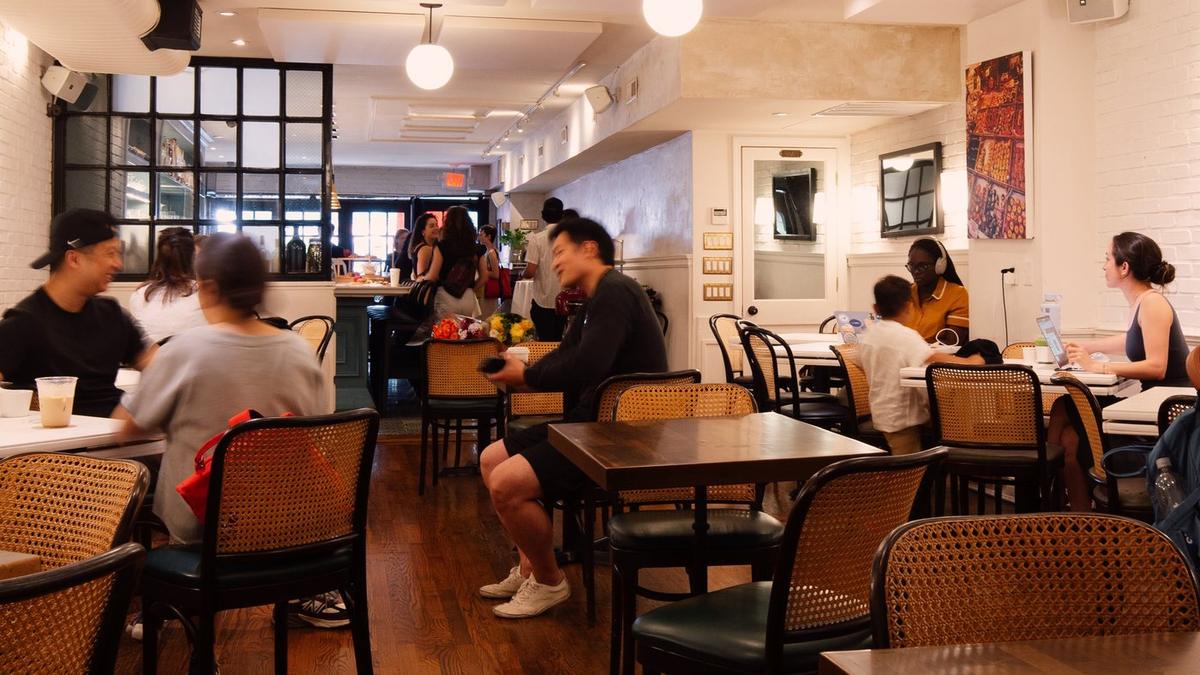
ASANO opens inside other people's dining rooms during the hours those rooms are not being used, and closes before the evening service arrives. There are two: one inside Sandro's on the Upper East Side, one inside The Noortwyck in the West Village.
She calls it flipping the usual coffee-shop model on its head — an idea she traces back to mottainai, the Japanese word for not letting something useful go to waste, one she grew up hearing.
And so a room that had only ever been lit in the evening began to be lit in the morning too. Coffee and whisked tea in the air, people at the tables, light in the windows on Bleecker Street — hours before the kitchen wakes up.
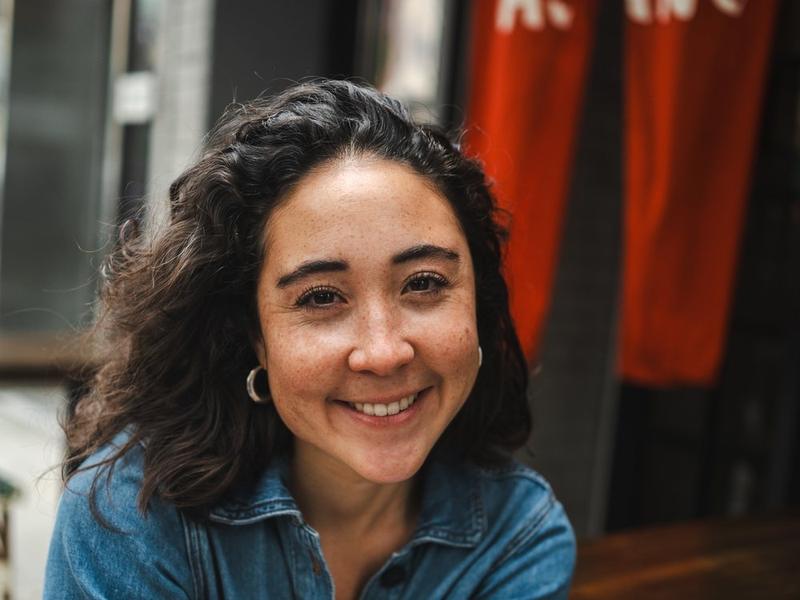
Kate is Japanese and American — she spent every summer in Japan as a kid, visited her parents who'd moved back to Tokyo throughout her twenties, and still speaks the language. Before ASANO, she worked in hospitality operations — Director of Strategy, Planning & Projects at Hawksmoor in New York, Deputy Chief of Staff to the CEO at Panera Bread, Chief of Staff at Mercato Metropolitano — after Princeton and Harvard Business School.
There is a moment each morning when the room changes hands.
I asked Kate whether such a moment exists — whether there is a point at which the space stops being the restaurant's and starts being hers. The answer was immediate.
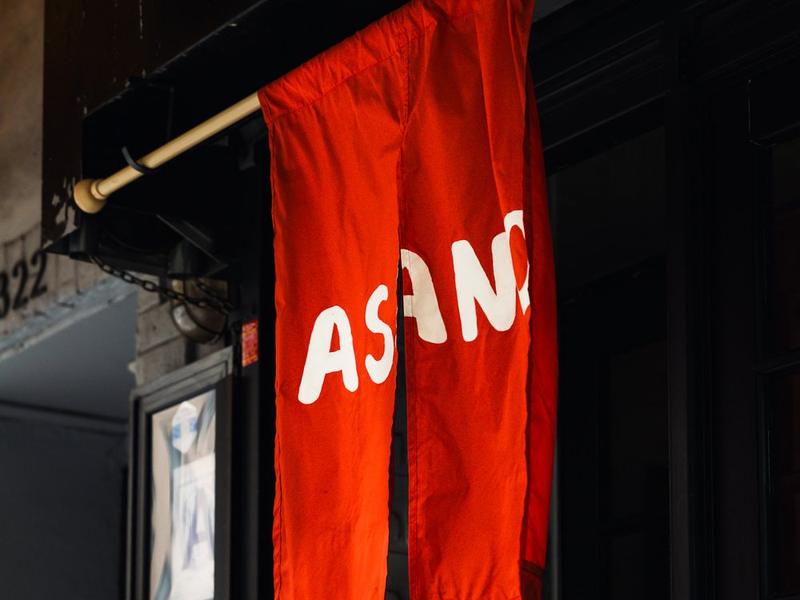
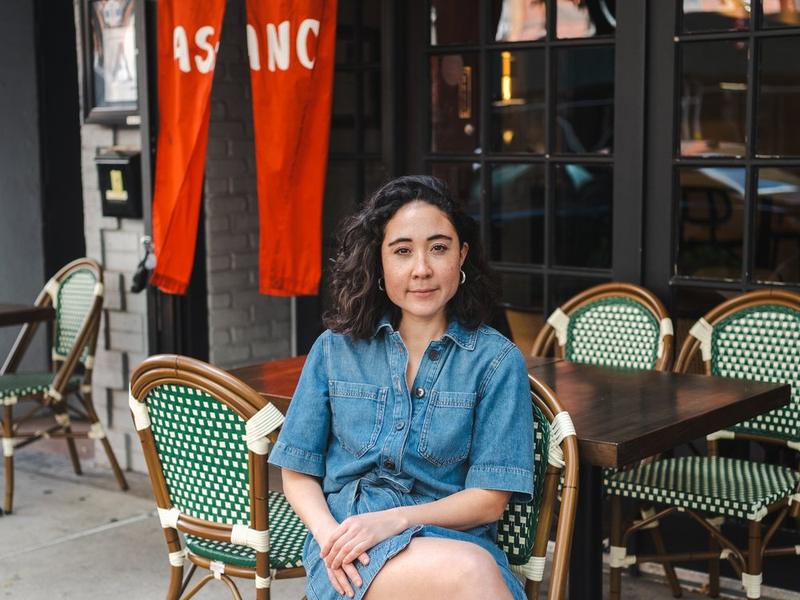
“The noren going up is that moment. It's the visual signal the space has changed hands for the morning.”
Her team hangs it every morning before they open. At the end of service they take it down, clean, and put everything back. The room returns to the restaurant with no evidence that anyone else was there.
Nothing is built and nothing is fitted out. A morning at ASANO begins with one piece of cloth going up, and ends with it coming down.
She trusts the grower — but flavor made the final call.
ASANO's matcha comes from Osada, a tea house in Morimachi, Shizuoka, along the Ōta river. The company was founded in 1948 and is now in its third generation. It is a blend of two cultivars, Saeakari and Saemidori.
Saemidori is a name that turns up often on good Japanese tea — registered in 1990, bred for sweetness and almost no astringency. Saeakari is far less familiar, so I asked why it was there.
“Honestly — it tasted delicious.”
The blend is Osada's own recommendation, and she took it.
There is a reason those two names sit well together. Saeakari is Saemidori's own offspring — bred by Japan's national agricultural research organisation from a cross made in 1989 that used Saemidori as one parent, selected for yield and for resistance to two leaf diseases. Its official description notes that it carries a cultivar aroma and umami of the Saemidori type, and that it suits growing regions from Shizuoka southward.
The matcha served at ASANO is the matcha Kate's own palate accepted. She wants people to drink what she thinks tastes good.
Osada describes the tea as roasted almond, snap pea, umami. What Kate is firm about is the standard underneath the choice. Asked what tea she would refuse however good it tasted, the answer is one line: anything without a traceable, direct relationship to the farm.
She says the tea holds steady through the year — that what you drink in February is what you drink in June.
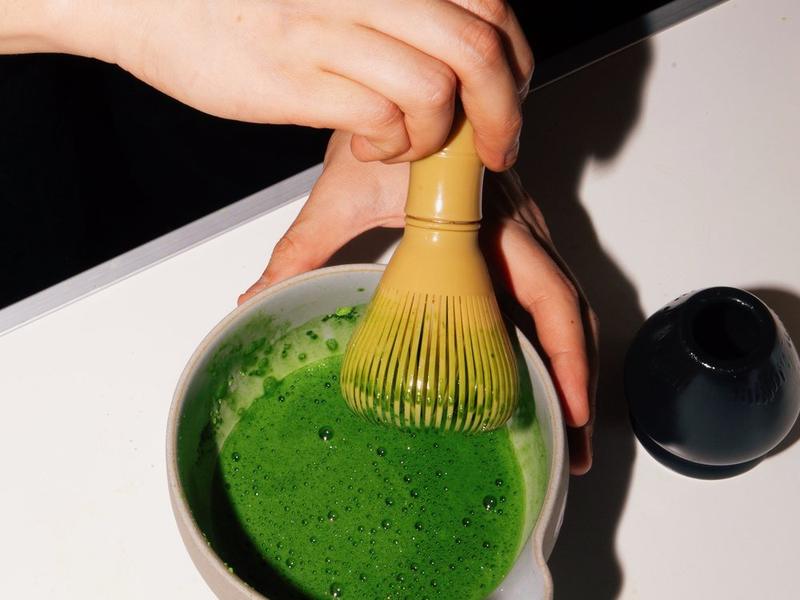
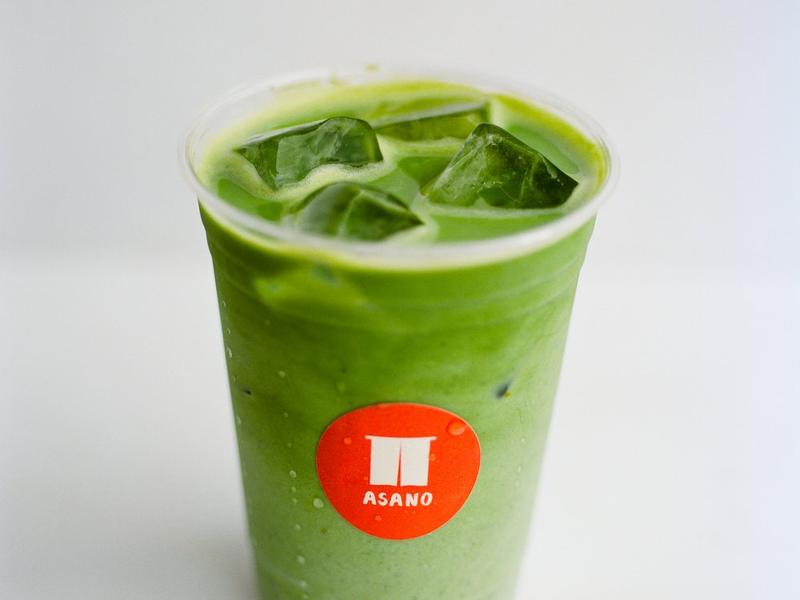
Here is what a bowl at ASANO actually involves.
Not off the boil. Above roughly 80°C the catechins come forward and flatten the tea; below it, the amino acids that carry matcha's sweetness and its savoury depth come through cleanly. 74°C sits inside that window — the range where matcha tastes most like itself.
A dense bowl. Four grams is a generous measure and fifty grams is a small pour, so there is very little water for the flavour to spread into. What arrives is the matcha itself rather than a suggestion of it.
Matcha is ground fine enough that static and humidity alone will pull it into clumps, and a clump that goes in unsifted does not whisk out — it sits in the bowl. Sifting also puts the powder through the maker's hands: you see and feel what state it is in before you commit it.
No blender, no electric frother — just a chasen, by hand, every time. Of everything she could point to — the sourcing, the model, the room — this is the step Kate cares about most.
Why it is not a matcha-only shop.
ASANO serves both, roughly half and half. Kate raised this herself before I could ask, and the way she framed it is worth quoting.
“It keeps the bar high rather than lower — matcha has to hold its own next to a well-made espresso, not just be the ‘alternative.’”
A single-origin from São Paulo sits on the same counter. Coffee is the standard she has chosen to set her matcha beside.
It's a useful way to place ASANO against the rest of the city. It isn't trying to be a ceremonial tea house, with all the ritual and stillness that implies, and it isn't a grab-it-and-go counter pour like a typical order at Blue Bottle. ASANO sits in between the two — ceremony-grade matcha, hand-whisked to order, moving at the pace of a normal New York morning.
People do arrive for one and leave with the other, in both directions. I asked what people expect from a café that ASANO deliberately does not do.
“A long, sprawling food menu — we stay laser-focused on coffee, matcha, and pastries rather than trying to be a full restaurant.”
The soul of this shop is the matcha and the coffee. That is how it sounded to me.
What to ask for, and who each one is for.
I asked her one plainer question, and the answer went to the centre of it.
Most of what I put to Kate was practical — temperatures, grams, who blends the tea, how the room works. Somewhere in the middle I asked something with no practical answer at all. What does tea mean to you?
“Tea is the thing that slows the morning down — a small, deliberate ritual in a day that otherwise can become quite chaotic.”
I did not expect that sentence.
In a Japanese tea room, the emptiness is the point. A morning that has been deliberately slowed is exactly that margin, made of time instead of space.
And once you have that sentence, everything else she said lines up behind it.
“Pre-sifted, hand-whisked, poured with care.” Few people notice it. Kate's philosophy is poured into a single bowl.
If you are going.
Both rooms close well before dinner service. The Upper East Side room runs 7:30am–2pm on weekdays and 8–11am on Saturday; the West Village room is 8am–3pm on weekdays.
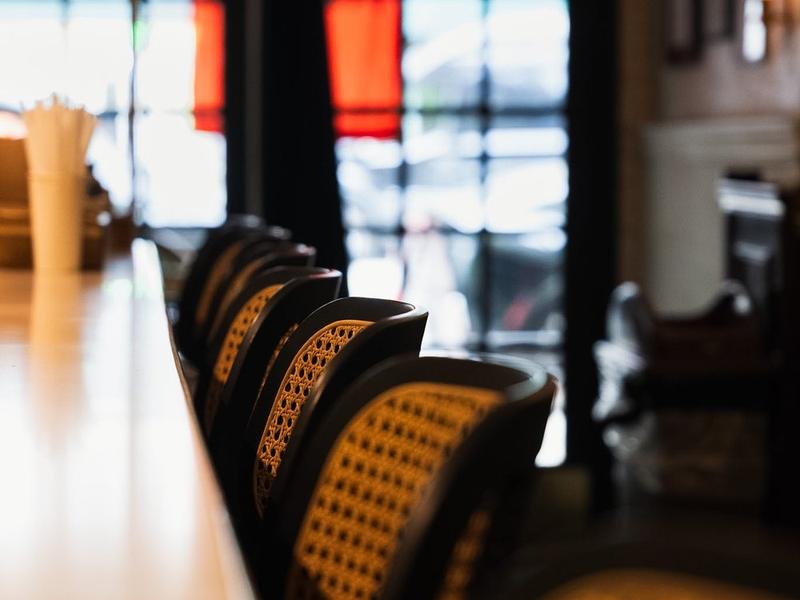
“I love our regulars who come sit at the bar — they all know my baristas by name.” It is a working counter rather than a ceremonial one, and it is where the shop is least like a café and most like a neighbourhood. If the weather's good, grab a table outside and watch the street go by.
People do occasionally arrive expecting dinner service and find a café instead. Kate says it usually turns into a good conversation. Look for the orange noren rather than the awning — the awning will have the restaurant's name on it.
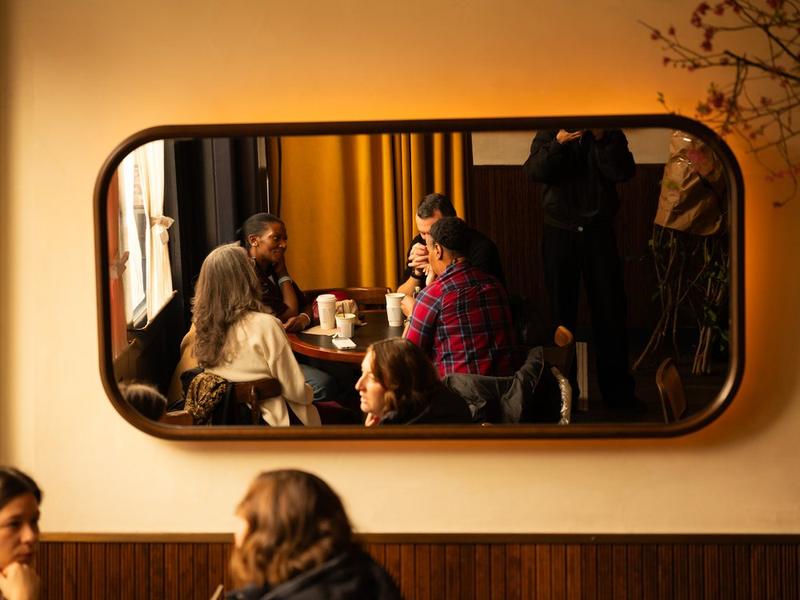
Neighbourhood regulars, people on their way to work, and — her words — a low-key meeting spot. Come with something to read, or with someone to talk to.
Quick answers, for anyone skimming.
Where can I get single-origin, traceable matcha in NYC?
ASANO serves hand-whisked matcha from Osada Tea in Morimachi, Shizuoka — a blend of Saeakari and Saemidori cultivars sourced directly from the grower — at two New York locations: inside Sandro's on the Upper East Side and inside The Noortwyck in the West Village.
Is ASANO in the West Village or the Upper East Side?
Both. ASANO runs two morning-only locations — one inside The Noortwyck in the West Village, one inside Sandro's on the Upper East Side — with the same hand-whisked matcha and coffee standard at each.
What makes ASANO different from a typical NYC coffee shop?
It doesn't have its own room. ASANO operates inside other restaurants' dining rooms during the morning hours before those restaurants open for the day, hanging an orange noren to mark the handover and taking it down before dinner service begins.
Find it
- Upper East Side
- Inside Sandro's — 322 E 86th St, New York, NY 10028
Mon–Fri 7:30am–2pm · Sat 8–11am - West Village
- Inside The Noortwyck — 289 Bleecker St, New York, NY 10014
Mon–Fri 8am–3pm - Tea
- Osada Tea, Morimachi, Shizuoka — Saeakari × Saemidori
- Links
- asanocafe.com · Instagram · Substack