Almost nothing in a Japanese tea set gets broken. It gets washed wrong.
Clay absorbs detergent and gives it back for months. A ceramic mesh that took a potter half a day to make can be destroyed in one pass with a scrubbing brush. An iron kettle rusts through from the inside because someone dried the outside and put it away. None of this is fragility — these objects routinely outlive their owners. It is simply that they ask for different habits than a mug does, and nobody is told what they are.
→ This is the maintenance side of everything in the guide to Japanese tea ware and what to buy in what order.
The One Rule: No Detergent on Unglazed Clay
If you take one thing from this article, take this.
A Tokoname kyusu, a Bizen cup, an unglazed anything — the body is porous. That porosity is the point; it is why the clay takes the hard edge off astringency and why the pot slowly darkens and improves with use. But a porous body does not distinguish between tea and washing-up liquid. Detergent soaks in, sits there, and leaches back out into hot water for weeks.
Hot water is enough. Tea leaves nothing behind that needs a solvent — no fat, no protein, no sugar. What builds up is tannin staining, and that is not dirt. On the inside of a well-used pot it is a good sign.
If you have already been washing your kyusu with detergent, do not panic and do not throw it out. Stop, rinse it with hot water each time, and give it a few weeks. It will come back. The clay releases what it absorbed at roughly the rate it took it in.
The Kyusu, Every Time You Use It
Three steps, and the first one is the one people skip.
Empty the leaves straight away. Not after breakfast — now, while the pot is still warm. Wet leaf sitting in a closed warm pot is how a kyusu starts to smell, and once it does the smell is in the clay and hard to get out. Tip, rinse, done. It takes eight seconds.
Rinse with hot water, including the mesh. Run water through from the inside so it pushes fine particles out through the mesh rather than deeper into it. If something is stuck, a soft brush. Never anything metal — a ceramic mesh is thin, and a single pass with a scourer will open the holes permanently, after which your tea will always have sediment in it.
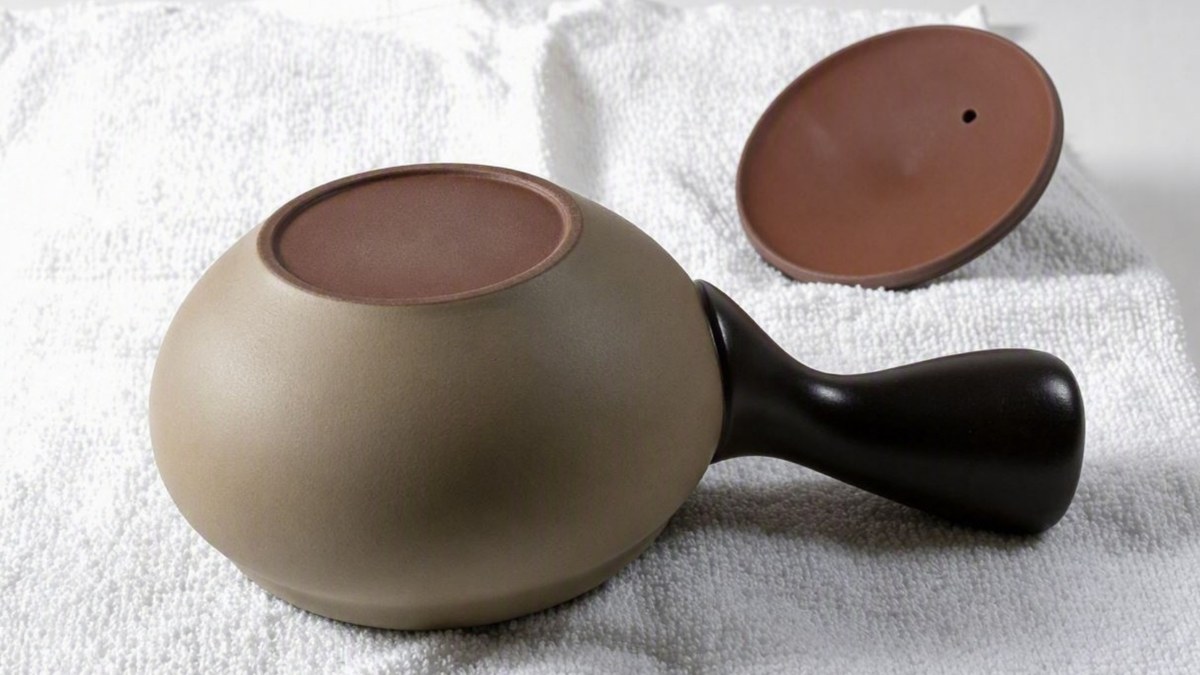
Dry it open and upside down. Lid off, pot inverted or tipped on its side, somewhere with air. A pot put away with the lid on and moisture inside will smell within a week. This is the single most common reason a good kyusu becomes unpleasant to use.
Once every few months, if you want, leave the pot to soak in plain hot water for an hour and then dry it thoroughly. That is the extent of deep cleaning a kyusu ever needs.
The Tetsubin: Dry It With Its Own Heat
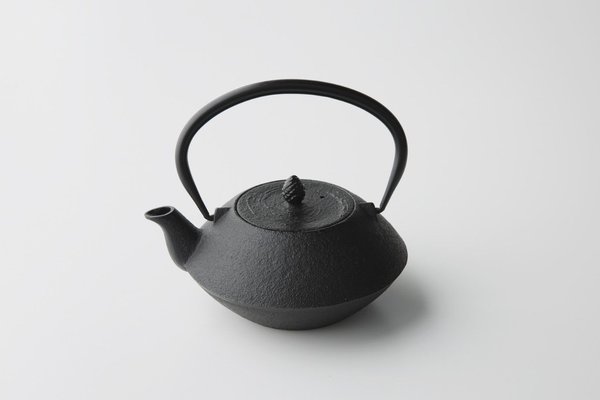
An iron kettle has one enemy and it is water left standing.
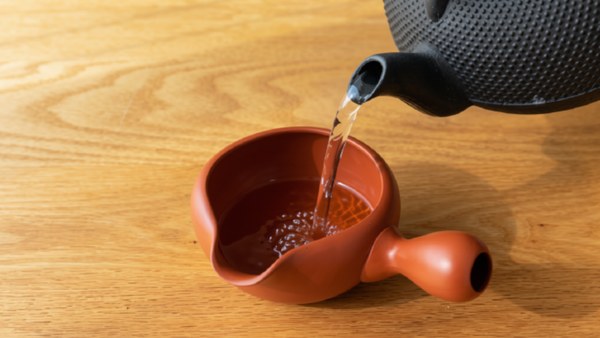
Empty it while it is still hot. Pour out the last of the water immediately after use, and the residual heat in the iron drives off what remains as steam within a minute. Leave the lid off while it cools. That is the whole routine, and it is why tetsubin survive a century in Japanese houses without any special care.
Do not scrub the inside. A raw-iron kettle develops a pale mineral scale on the interior over months of use — yuaka. It looks like something that should be removed. It is the opposite: that layer is what stands between the iron and the water, and it is a large part of why an old tetsubin gives cleaner-tasting water than a new one. Removing it sets you back years.
Do not use detergent, and do not put a hand inside it. Oils from skin will encourage rust on bare iron.
If rust does appear, it is usually recoverable: boil green tea leaves in the kettle for twenty minutes or so and pour away, repeating until the water runs clear. The tannin reacts with the iron and forms a protective layer. This is a genuine traditional repair, not folklore — though it works on light surface rust, not on a kettle that has been left full of water for a month.
The Chasen: The Most Fragile Thing You Own
A bamboo whisk is a consumable. It will not last for ever and it is not supposed to, but most of them die years early from three avoidable things.
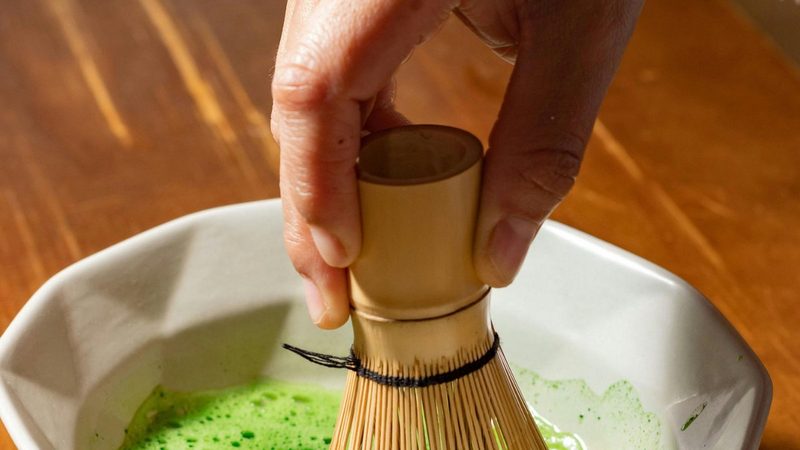
Soak the tips before you whisk. Stand the chasen in warm water for a minute before its first use of the day. Dry bamboo is brittle; wet bamboo bends. Prongs snap in dry whisks, almost never in soaked ones.
Rinse in warm water only, immediately. No soap. Matcha dries onto bamboo like paint. Swirl it in a bowl of warm water straight after use and the powder simply leaves.
Dry it on a kusenaoshi. This is the ceramic dome that comes with whisk sets and gets thrown away by people who assume it is packaging. It is not — it holds the prongs splayed in their proper shape while the bamboo dries and shrinks. Without it the whisk closes inwards as it dries and will never whisk properly again. If you do not have one, stand the whisk upright on its handle, tips up, in open air. Never leave it lying in a drawer.
The Chawan, the Yunomi and Everything Glazed
Glazed pieces are the easy ones. The glaze is glass — it is not porous, and detergent will not soak into it.
Even so, two cautions. Check the foot. The unglazed ring a bowl or cup stands on is bare clay and will absorb whatever it sits in, so do not leave pieces standing in soapy water. And keep them out of the dishwasher: it is not the detergent that does the damage but the thermal shock and the knocking, and hand-painted or gold-decorated pieces will fade regardless.
If a bowl develops fine crazing in the glaze over years of use — a web of hairline lines — that is kannyu, and in Japanese practice it is considered part of the object growing into its life rather than a fault.
An Acupuncturist's View: Maintenance Is Not Repair
Everything in this article takes under a minute and none of it is interesting. That is exactly why it gets skipped, and it is the same reason the equivalent gets skipped with bodies. Nobody has ever been excited about doing the small thing on the day nothing is wrong. But the difference between a kyusu that lasts thirty years and one that becomes unusable in two is not skill or money or a better pot — it is eight seconds, done every time. I would say the same about most of what I see in my treatment room. The people who stay well are not doing anything clever. They are doing something dull, on a day when it did not feel necessary, again.
Quick Reference
| Piece | After every use | Never |
|---|---|---|
| Kyusu (unglazed) | Empty leaves, rinse hot, dry lid-off | Detergent; metal on the mesh |
| Tetsubin (raw iron) | Empty hot, lid off, air-dry | Scrubbing the interior scale |
| Tetsubin (enamel-lined) | Rinse, dry | Leaving water standing |
| Chasen | Warm rinse, dry on a kusenaoshi | Soap; drying flat in a drawer |
| Chawan, yunomi | Wash and dry as normal | Dishwasher; soaking the foot |
| Chazutsu | Wipe dry only | Washing it out with water |
That last line surprises people. Never wash a tea caddy. Any moisture left inside will pass straight into the next tea you put in it, and the tin will hold the damp for days. Wipe it out with a dry cloth and leave it open for an hour if it needs it.
Frequently Asked Questions
How do I clean a Japanese teapot?
Hot water only. Empty the leaves as soon as you have finished pouring, rinse the body and the mesh with hot water, then leave the pot upside down with the lid off until it is completely dry. Unglazed clay is porous and absorbs detergent, which then leaches back into your tea for weeks. Never scrub the mesh with anything metal.
I have been using soap on my kyusu. Have I ruined it?
Almost certainly not. Stop, rinse with hot water from now on, and give it a few weeks of ordinary use. Clay releases what it absorbed at roughly the rate it took it in, so the taste fades. The pot is not damaged — it is only carrying something it will let go of.
Should I remove the white deposit inside my iron kettle?
No. That mineral layer — yuaka — builds up over months of use and sits between the iron and the water. It is a large part of why an old tetsubin gives cleaner-tasting water than a new one, and it protects against rust. Scrubbing it out undoes years of use. Simply empty the kettle while it is still hot, leave the lid off, and let its own heat dry it.
What is the ceramic dome that came with my matcha whisk?
A kusenaoshi — a whisk shaper, and it is not packaging. Bamboo shrinks as it dries, so a chasen left to dry unsupported closes inwards and stops whisking properly. Standing it on the dome holds the prongs in shape. If yours was thrown away, stand the whisk upright with the tips facing up in open air rather than laying it in a drawer.
Can Japanese tea ware go in the dishwasher?
Glazed cups and bowls will survive it, but the thermal shock and knocking shorten their life and any hand-painted or gilded decoration will fade. Unglazed clay, iron and bamboo must never go in — detergent soaks into porous clay, iron rusts, and bamboo splits. Given that hot water and a minute is all any of it needs, the dishwasher saves very little.