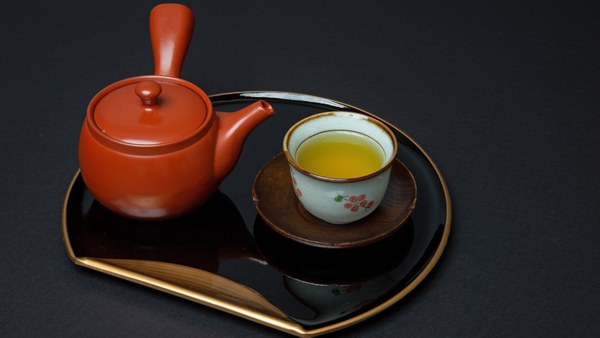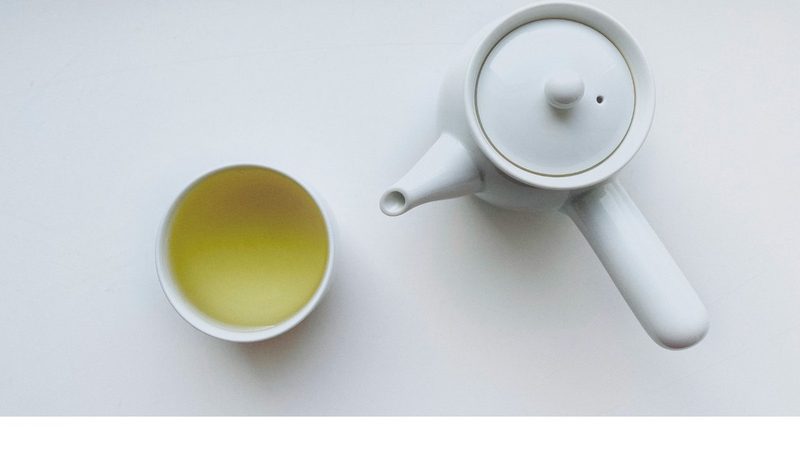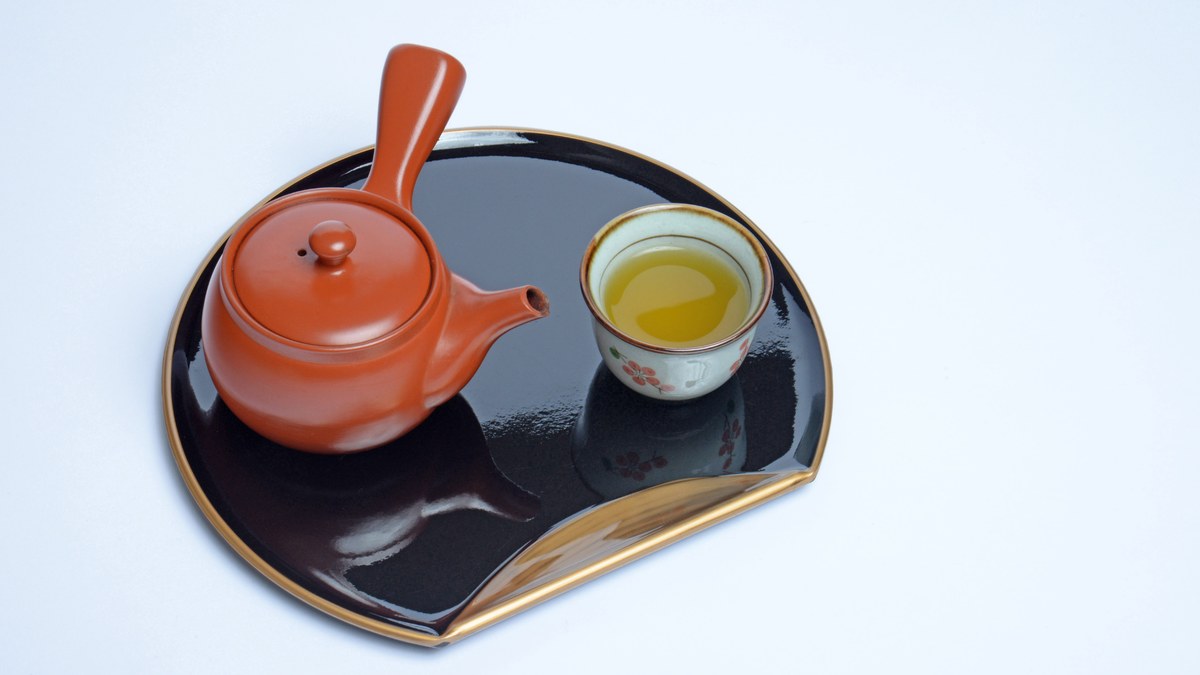
Here is the claim, in the form you will meet it. The iron in Tokoname's red clay reacts with the tannins in the tea and softens the bitterness, giving a rounder, mellower cup.
You will find that sentence on shop pages, in guidebooks, in nearly every English article about Japanese teapots, and in my own article about the Six Ancient Kilns. What you will very rarely find is anyone asking whether it is true, what the effect actually is, or how large.
So: it is true that something happens, and it has been measured. But the mechanism people describe is not quite the mechanism that operates, and the conclusion most people draw from it — buy a Tokoname pot for the flavour — does not follow as neatly as the shops would like.
→ For the town, the strainer and the history behind the pot itself, start with Tokoname ware: the town where Japan's teapots come from.
Somebody Did Measure It
In 2007 and 2009, researchers at the Mie Prefectural Industrial Research Institute presented work on exactly this question, later written up for the food analysis centre SUNATEC. Mie is home to Yokkaichi, which makes Banko ware — unglazed iron-rich stoneware teapots, the same family of object as Tokoname's shudei — and to Ise tea. They had a local reason to want a real answer.
They brewed green tea in teapots of different materials and measured what came out, using a taste sensor for astringency and chromatography for the individual compounds. The materials ranged from unglazed stoneware to glazed ceramic, porcelain, glass and aluminium.
What They Found
Two results, and the second is the interesting one.
The amount of tannin reaching the cup depends on what the pot is made of. Unglazed stoneware pots took a measurable amount of it out. Glazed and glassy surfaces took out a little. Aluminium took out essentially none.
The amount of amino acid reaching the cup does not depend on the pot at all. Glutamine was unaffected by material. A later follow-up using an amino acid analyser confirmed the same for theanine — the compound responsible for the sweet, savoury depth that Japanese green tea is prized for. Theanine is not adsorbed by any pot surface they tested.
Put those together and you have the actual effect. The pot removes some of what makes tea astringent and none of what makes it sweet. The umami is not increased. It is left alone while the astringency is reduced, so it comes forward by comparison.
The researchers also found that firing method mattered: tannin adsorption differed by as much as a factor of two between pots fired differently, while amino acids stayed flat throughout.
So the Popular Explanation Is Wrong
Not wrong about the outcome. Wrong about what is happening.
The usual telling implies a transformation — iron meets tannin in the liquid, a reaction occurs, and the bitterness is converted into something rounder. That is not what the measurements describe.
What they describe is adsorption. The astringent compounds stick to the inside surface of the pot and stay there. They are not transformed. They are simply removed, in the way a filter removes something — and then you rinse the pot and they go down the sink.
Two things drive it, and the research points at both. Chemically, catechins are highly reactive polyphenols and bind readily to iron present at the surface of the clay. Physically, an unglazed fired surface is rough and porous at a microscopic scale, so it presents vastly more area to the liquid than glass or metal does. Electron micrographs in the study show exactly that contrast: glass and aluminium smooth, stoneware pitted and irregular.
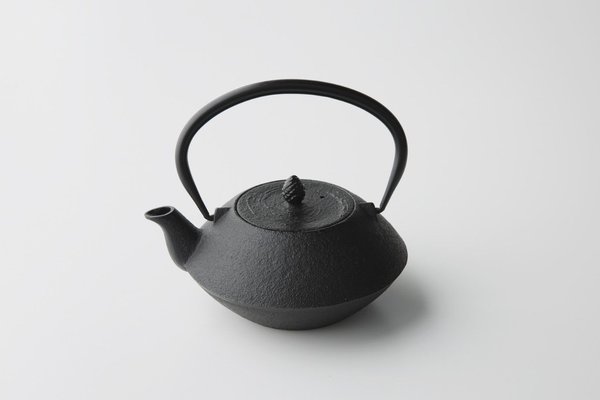
This also explains why an unlined iron kettle is a different case entirely. When iron actually dissolves into hot water and meets tannin, the product is iron tannate — which is not subtle. It is the black pigment in iron gall ink, and it is why you should never brew tea in a raw iron tetsubin. In a fired clay pot the iron is locked into the ceramic body. It interacts at the surface. It does not go into your cup.
The Part That Should Change How You Shop
If the effect comes from an unglazed, porous, iron-bearing surface, then it is not a Tokoname property. It is a property of that kind of ceramic.
Banko ware does it. Tokoname does it. So, in principle, does any well-fired unglazed stoneware pot with iron in the body — including pots from potters whose names appear on no shop page in English. The clay of a particular town is not a secret ingredient. The surface is doing the work.
Which means the honest reason to buy a Tokoname kyusu is the one I gave in the article about the town: the strainer, the fit of the lid, how cleanly it pours, and the fact that a place with a thousand years of practice tends to produce reliable ones. Those are real, specific, and they vary enormously between pots. The clay effect is real too, but it is the part you would get from any comparable unglazed pot.
The Trade-off Nobody Mentions
There is a cost, and it is slightly awkward for a subject usually written about in praise.
Catechins are the compound most of the health interest in green tea is about. If your pot is adsorbing some of them, your cup contains slightly fewer of them than the same tea brewed in glass. You cannot have it both ways: the thing being removed for the sake of taste is the thing being counted for the sake of health.
The researchers make a fair point in response — that tea brewed properly from leaf, in a pot you enjoy using, tends to get drunk more often and in better condition than tea you do not enjoy, so the practical intake may well be higher. That is reasonable. It is also not a measurement, and it is worth being clear about which is which.
For most people the difference is small and the flavour is worth it. But if you drink green tea specifically for catechin intake, glass or porcelain will deliver more of it into the cup.
What Is Still Unknown
Three things, and the researchers say so themselves.
Aroma. Nobody in this work measured what the pot does to the volatile compounds, which is a large part of how tea is experienced.
Minerals. Whether the clay changes the mineral content of the water in any way that matters has not been established.
Seasoning over years. Every source says an unglazed pot improves with use. If the mechanism is adsorption, a surface that has been adsorbing tannin for a decade is presumably a different surface than a new one — but whether it adsorbs more, less, or differently, I have not found measured anywhere.
That last one is the gap I would most like to see closed, because it is the claim tea drinkers care about most and repeat most confidently.
The Honest Summary
An unglazed stoneware teapot does change your tea, and the change has been measured rather than merely asserted. It takes out some of the astringency and leaves the sweetness untouched, so the cup tastes rounder and more savoury than the same leaf brewed in glass.
But the pot is subtracting, not adding, the effect belongs to the surface rather than to any particular town, and it comes with a small cost in the compound that most health claims about green tea rest on.
None of that makes a Tokoname kyusu a worse purchase. It makes it a purchase you can now explain, which is a better position than repeating a sentence about practical magic.
Frequently Asked Questions
Does a Tokoname clay teapot really make tea taste better?
It makes it less astringent, which most people experience as better. Research at the Mie Prefectural Industrial Research Institute measured tea brewed in pots of different materials and found that unglazed stoneware removes a measurable amount of tannin while leaving amino acids — including theanine, the source of sweetness and umami — completely unaffected. The result is a rounder cup. But the pot is removing astringency rather than adding anything.
Does the iron in the clay react with the tea?
Not in the way the popular explanation suggests. The catechins bind to iron at the surface of the clay and stay there — adsorption rather than a transformation in the liquid. Roughness helps too: an unglazed surface presents far more area than glass or metal. Note that this is different from an unlined iron kettle, where iron genuinely dissolves into the water and forms iron tannate, the black pigment used in iron gall ink. That is why you never brew tea in raw iron.
Is this effect unique to Tokoname?
No. The research was conducted on Banko ware from Mie, not Tokoname, and the mechanism depends on the surface being unglazed, porous and iron-bearing. Any well-fired unglazed stoneware pot with iron in the body should behave similarly. The better reasons to choose a Tokoname kyusu are the built-in ceramic strainer, the fit of the lid and how cleanly it pours.
Does a clay teapot reduce the health benefits of green tea?
Slightly, in the narrow sense that catechins are what is being adsorbed and catechins are what most green tea health claims concern. The same tea brewed in glass or porcelain delivers more of them into the cup. For most drinkers the difference is small and the improvement in taste is worth it, but if catechin intake is your specific reason for drinking green tea, a non-porous pot is the better choice.
Does an old teapot work better than a new one?
This is said everywhere and, as far as I can find, has not actually been measured. It is plausible — a surface that has adsorbed tannin for years is not the same surface it started as — but whether that makes it more effective, less effective or simply different is an open question. What is not in doubt is that a porous pot takes on the character of what you brew in it, which is why it is worth keeping one pot for one tea.