Here is a test. Open the packet of green tea in your kitchen and smell it. If it smells of almost nothing, or faintly of the cupboard, or of hay, it has gone. No teapot will bring it back, no adjustment to your water will hide it, and no amount of leaf will make the cup taste the way it did in the shop.
This happens to almost everyone who buys good Japanese tea, and it happens fast. It is also the easiest problem in this entire subject to solve, and solving it costs nothing.
→ Storage is the second thing to fix, before the pot and long before the kettle. For where it sits among everything else, see the guide to Japanese tea ware and what to buy in what order.
Why Green Tea Goes Off Faster Than Any Other Tea
Black tea is oxidised on purpose. The leaf is bruised and left until it turns dark, and by the time it reaches you the reaction that would change it has already happened. That is why a tin of black tea can sit in a cupboard for a year and still taste like itself.
Japanese green tea is the opposite. The leaf is steamed within hours of picking, specifically to stop that reaction before it starts. Everything you are paying for — the green colour, the fresh aroma, the sweetness — is a state the leaf has been held in, not a state it has settled into. It is being kept, not preserved.
Left in air, it keeps going anyway, just more slowly. The catechins oxidise. The chlorophyll breaks down, so the leaf shifts from deep green towards brown and the brewed cup turns from green-gold to dull yellow. The volatile compounds that make the aroma simply leave. And the lipids in the leaf oxidise into something Japanese tea people call hineka — a flat, slightly stale, hay-like smell that is the specific signature of tea that has been open too long.
The Five Things That Are Ruining It
Oxygen. The main one, and the reason a resealed bag is not enough — each time you open it you refill it with air.
Light. Ultraviolet breaks down chlorophyll and catechins directly. A clear glass jar on a sunny shelf looks lovely and is one of the worst containers you can choose.
Heat. Every chemical reaction here runs faster when it is warm. Tea kept in a cupboard above the stove ages several times quicker than the same tea in a cool one.
Moisture. Japanese green tea is dried down to around three to five per cent water. Above that the whole process accelerates sharply, and damp leaf can go musty rather than merely stale.
Odour. This one surprises people. Dry tea leaf is porous and highly absorbent — it was used in Japanese houses as a deodoriser for exactly that reason. Tea stored beside coffee will taste of coffee within a fortnight. Beside spices, spices. It does not need to be touching anything.
The Refrigerator Mistake
This is the most common piece of well-meant advice in the English-speaking tea world, and it is backwards.
Do not keep opened green tea in the refrigerator. Every time you take the container out, it is cold and the room is warm, and water condenses on the leaf. You have introduced the one enemy that does the most damage in the shortest time, and you do it again every single morning.
Unopened tea is a different matter. A sealed, unopened packet can go in the refrigerator or the freezer and will keep for months. But when you want it, take the sealed packet out and leave it closed until it has come back to room temperature — several hours, not minutes. Then open it, decant it, and keep it at room temperature from then on.
What a Chazutsu Actually Is
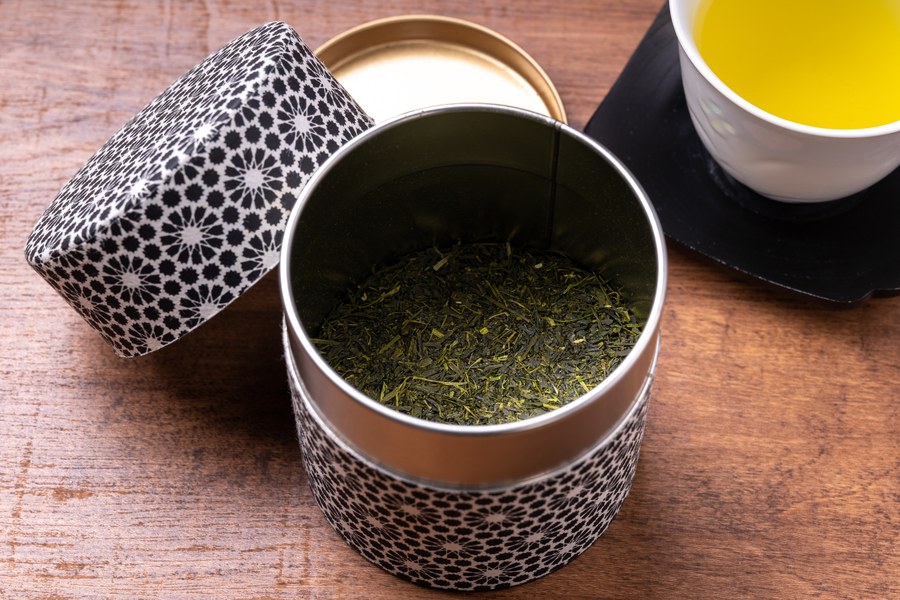
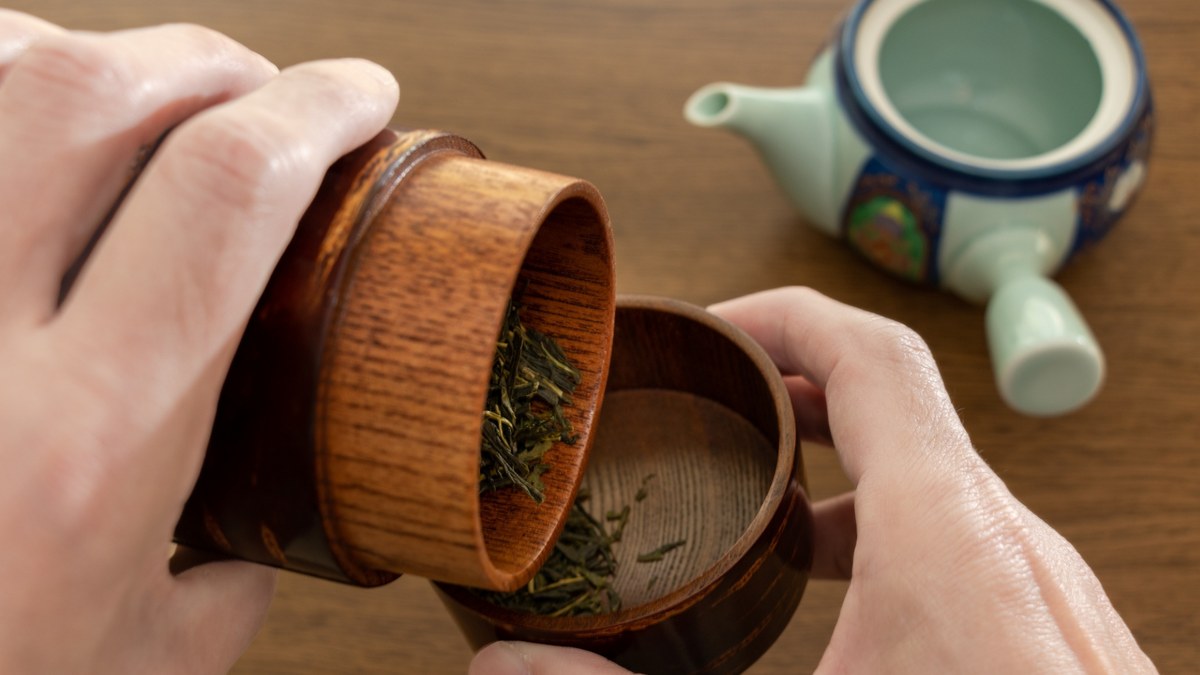
The Japanese answer to all five problems at once is the chazutsu (茶筒) — a cylindrical caddy, usually metal, sometimes wood or wrapped bark.
The good ones have two lids. An inner lid drops into the neck of the caddy and, if it is well made, sinks the last few millimetres slowly under its own weight as the air escapes around it. That slow sink is the sound of a seal closing. An outer lid goes over the top of that. It is a simple, entirely mechanical solution to the oxygen problem, and a well-fitted one will still seal a century later.
The most admired versions are wrapped in polished cherry bark — a craft called kabazaiku, centred on Kakunodate in Akita, where bark is pressed and burnished until it looks like dark lacquer. Cherry bark happens to buffer humidity as well as it looks, which is a piece of luck the craftsmen there have been living on for two hundred years.
But I want to be clear about something. The chazutsu is a good solution, not a magic one. What matters is airtight, opaque, cool, and away from smells. A plain kitchen tin with a tight lid does the job. If you want to buy a beautiful one, buy it because it is beautiful and you will enjoy using it every morning — that is a perfectly good reason. Just do not believe that the tea knows the difference between cherry bark and steel.
One Thing a Natsume Is Not
A short warning, because it catches people out. The natsume — the small lacquered container you see in tea ceremony, named after the jujube fruit it resembles — is not a storage container.
It holds the matcha for one gathering. It is filled before guests arrive and emptied after. It is not airtight, it is not meant to be, and matcha left in one will be flat within days. If you have bought a natsume and are keeping your matcha in it, move the matcha to something sealed and keep the natsume for the moment it was made for.
How Long Does Green Tea Actually Last?
| Tea | Unopened | Once opened |
|---|---|---|
| Sencha, gyokuro | 6–12 months | about 1 month |
| Matcha | 6–12 months | 2–4 weeks |
| Hojicha, genmaicha | 6–12 months | 2–3 months |
| Bancha, kukicha | up to 12 months | 2–3 months |
Two things are worth reading out of that table. Matcha is the most fragile thing on it, because grinding leaf into powder multiplies its surface area enormously and every particle is exposed. And the roasted teas last longest, because roasting has already driven off the volatile compounds that were going to escape anyway.
None of these dates are safety dates. Old green tea will not hurt you. It has simply stopped being the thing you paid for.
An Acupuncturist's View: Buy Less, More Often
The honest answer to storage is to need less of it. A hundred grams of sencha is about a month of drinking for one person — which is, not coincidentally, exactly how long it stays good once opened. Buying the big bag because it works out cheaper per gram is a false economy, because the last third of it will not taste like the first third. I see the same reasoning in my practice all the time: people buy the ten-session package because it is better value, then attend four sessions. The cheaper unit price is real and completely beside the point. Buy the amount you will actually finish while it is still what you wanted.
How to Tell If Yours Has Gone
You do not need to brew it. Open the container and smell the dry leaf.
Fresh sencha smells green and slightly sweet, sometimes marine, with a clear top note that arrives immediately. Tired sencha smells of very little, and what is there is flat and dusty. Gone sencha smells of hay or old paper — that is hineka, and once you have identified it once you will never miss it again.
Colour helps too. Fresh Japanese green tea is a deep, slightly blackish green. As it ages it goes browner and duller, and the brewed liquor moves from green-gold towards a flat yellow.
If yours has gone, do not throw it away. Old sencha makes a decent hojicha — roast it in a dry pan over a low heat, moving it constantly, until it turns brown and smells toasty, about three to five minutes. It will not be a great hojicha. But it will be a good deal better than what it was.
Frequently Asked Questions
How should I store green tea at home?
Airtight, opaque, cool, and away from anything with a strong smell. Move it out of the bag it came in and into a sealed container, then keep it in a dark cupboard well away from the stove, the coffee and the spice rack. Green tea absorbs odour readily, so proximity matters even through packaging.
Should green tea be kept in the fridge?
Only if it is unopened. A sealed packet keeps well in the refrigerator or freezer for months. But once opened, refrigerating it causes condensation on the leaf every time you take it out, and moisture does more damage faster than anything else. If you are bringing a sealed packet out of the fridge, leave it closed until it reaches room temperature — several hours — before opening.
How long does green tea last once opened?
About a month for sencha and gyokuro, two to four weeks for matcha, and two to three months for the roasted teas like hojicha and genmaicha. These are quality dates, not safety dates — old green tea will not harm you, it has simply lost what you were paying for. Matcha is the most fragile because grinding exposes so much more surface to the air.
Do I need a proper Japanese tea caddy?
No. What matters is that the container is airtight, opaque and kept somewhere cool. A well-made chazutsu with a double lid does this beautifully and lasts a lifetime, and if you will enjoy using one every morning that is reason enough to buy it. But a plain kitchen tin with a tight lid solves the same problem tonight, for nothing.
Can I still drink green tea that has gone stale?
Yes — it is a quality problem, not a safety one. If it smells of hay or old paper rather than of anything green, it will taste flat but it will not hurt you. A better use is to roast it: warm it in a dry pan over low heat, stirring constantly, for three to five minutes until it turns brown and smells toasty. You have made a rough hojicha, and roasted tea hides age far better than green tea does.