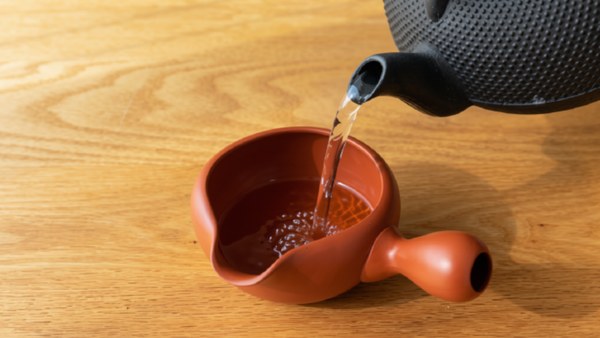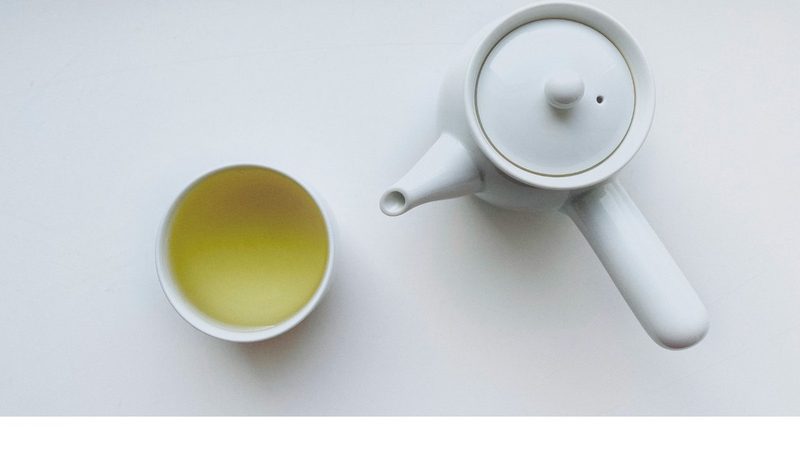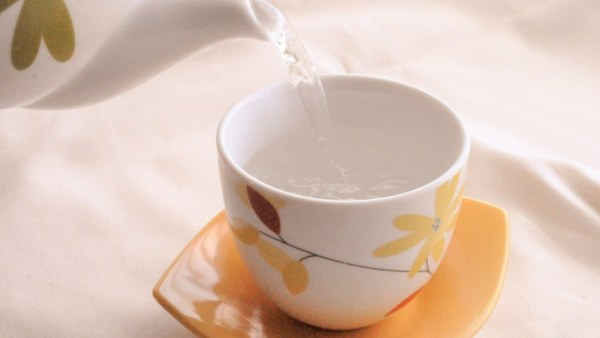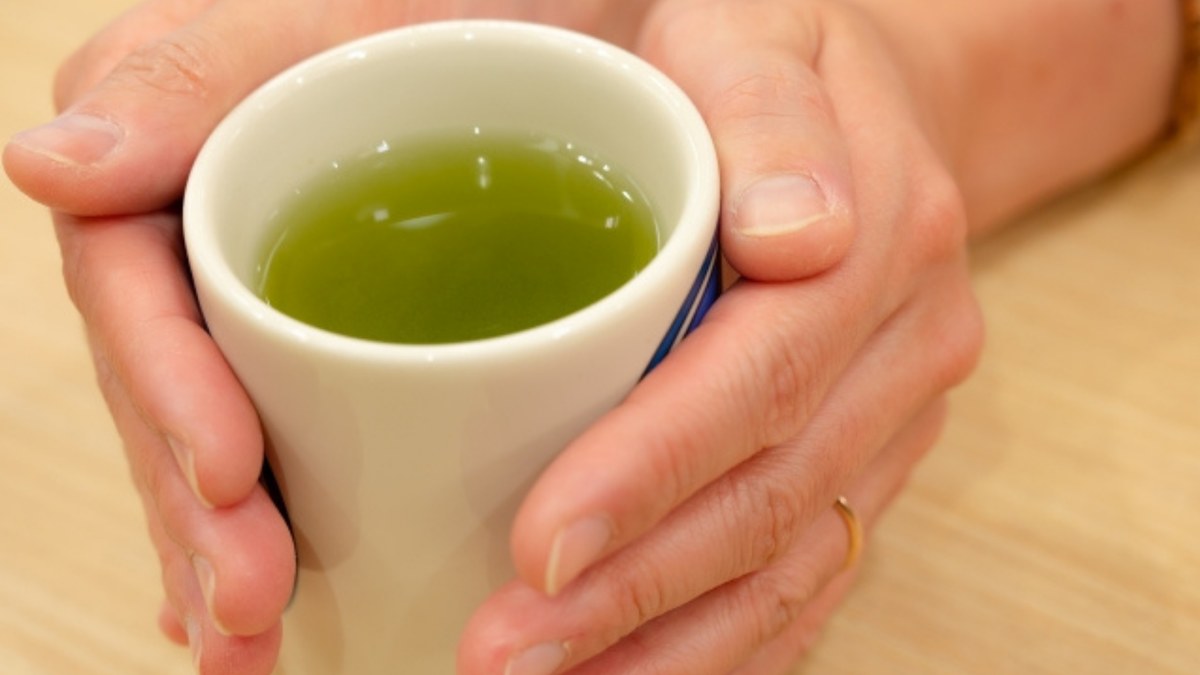
Pick up a Japanese teacup and the first thing you notice is what is missing. No handle. To anyone raised on European teacups this looks like an oversight, or at best a stylistic quirk — a cup that has not finished being designed.
It is the opposite. The missing handle is the most deliberate thing about the object, and once you know what it is for you cannot unsee it.
→ The cup is the fourth thing to fix, after temperature, storage and the pot. For where it sits among everything else, see the guide to Japanese tea ware and what to buy in what order.
Why There Is No Handle
A handle exists to keep your hand away from something too hot to touch. That is the whole of its function. Which means a cup with a handle is a cup designed on the assumption that the drink inside it will be dangerously hot.
Japanese green tea is not. Sencha is brewed at 70–80°C and reaches the cup lower than that. Gyokuro arrives at barely 50°C. At those temperatures a cup is warm in the hand, not painful, and a handle solves a problem that does not exist.
What the missing handle gives you instead is information. If the cup is too hot to hold comfortably, the tea inside it is too hot to drink. Your hands find this out first, before your mouth is committed to anything. The cup is not just a container; it is the last check in the process.
The European handle, incidentally, is the newer invention. Tea arrived in Europe in handleless bowls copied from China, and English and German potters added handles in the eighteenth century — partly because Europeans drank tea near boiling, partly because they drank it in far larger volumes and so held the cup much longer. Both traditions solved their own problem correctly. They just had different problems.
Wall Thickness Decides What Reaches Your Lip
This is the part that does real work and almost nobody explains.
A thick-walled cup conducts heat slowly. The outside stays comfortable while the tea inside stays warm, so you can hold it, and the tea keeps its temperature longer. A thin-walled cup does the reverse: the heat moves straight through, the cup gets hot fast, and the tea cools quickly.
Neither is better. They are for different teas.
Thick, heavy cups suit hojicha, bancha and genmaicha — teas brewed near boiling, drunk in quantity, held for a while. The thickness buys you the time to drink it.
Thin, small cups suit gyokuro and high-grade sencha — teas served at 50–60°C in mouthfuls rather than cupfuls. There is no heat to protect yourself from, and the thin wall lets you feel exactly how warm the liquid is through your fingers.
Material matters here too, though less than thickness. Porcelain is dense and moves heat readily. Unglazed or coarsely-bodied stoneware moves it more slowly and feels warmer to the touch at the same temperature. This is why a heavy stoneware cup of hojicha feels comforting in a way a thin porcelain one does not, and it is a physical fact rather than an aesthetic opinion.
The Rim Matters More Than the Body
Your lip touches perhaps four millimetres of this object. Everything else is delivery.
A thin rim puts almost nothing between you and the liquid. The tea arrives in a narrow stream and the impression is clean and precise. A thick, rounded rim slows the flow and softens the arrival — and it is also gentler on the lip when the tea is hot, because the rim itself holds less heat against you at the point of contact.
Then there is the angle. A flared rim — hanzori in Japanese — makes you tilt the cup less, and the liquid spreads across the front of the tongue, where sweetness registers most strongly. A straight rim sends it further back. This is the same principle wine glasses are shaped around, and it is just as real in a teacup.
If you are ever choosing between two cups and cannot decide, ignore the picture on the outside and run your thumb around the rim. That is the part you will actually use.
Which Cup Is Which
The names overlap and English shops use them loosely. Here is what they actually mean.
| Name | Shape | For |
|---|---|---|
| Yunomi (湯呑) | Tall, straight-sided, 100–180ml | Everyday tea, at home |
| Senchawan (煎茶碗) | Wider, shallower, 60–100ml | Sencha, often in fives |
| Kumidashi (汲出し) | Wide and low, with a saucer | Serving guests |
| Gyokuro cup | Very small, thin, 20–40ml | Gyokuro only |
| Guinomi (ぐい呑) | Small, often heavy | Sake. Not tea. |
That last row catches a lot of people. Guinomi and small yunomi look almost identical online, and sake cups are frequently sold to tea drinkers by shops that do not know the difference. If a small cup is described as being for sake, it is for sake — it will hold tea perfectly well, but it was not shaped for it.
One more thing that puzzles Western buyers: Japanese cups are sold in fives, not sixes. Japanese tableware sets are conventionally odd-numbered, and four is avoided because the word for four sounds like the word for death. A set of five is family plus one guest, which is also simply a sensible number for a house.
And you will see cups sold in pairs of two different sizes — meoto yunomi, husband-and-wife cups, the larger one traditionally for the husband. The convention is old-fashioned and most people now simply take whichever they prefer. But it is why a pair of Japanese cups so often does not match in size, which otherwise looks like a mistake.
An Acupuncturist's View: The Hands Know First
The reason the handleless cup is a good design is not that hands are precise thermometers. It is that they are early ones. Your mouth is sensitive, but by the time your mouth reports on a liquid, you have already taken it in. The oesophagus below is worse — it is poorly served by the kind of nerve endings that give you sharp, located pain, which is why people can swallow something hot enough to injure the lining and register only a vague discomfort. Given that the International Agency for Research on Cancer classifies drinking anything above 65°C as probably carcinogenic, a warning that arrives in your hands rather than your throat is worth having. I like that the Japanese cup does not lecture you about this. It simply cannot be picked up when the answer is no.
If You Are Buying One
Some plain advice.
Buy two. Tea is better with someone across the table, and a single cup quietly assumes it will not happen.
Match the cup to what you drink. If it is mostly hojicha, get something with weight to it. If it is mostly good sencha, go thinner and smaller than feels natural — Western cups are much larger than Japanese ones, and a 300ml mug of sencha will be cold and bitter before you finish it.
Hold it before you commit, if you can. Weight, balance and rim are the three things that decide whether you reach for a cup every morning for ten years or leave it at the back of the cupboard. None of them photograph.
Do not buy the matching set. Not at first. One or two cups you actually like will teach you more about what you want than five of something you chose from a photograph.
Frequently Asked Questions
Why do Japanese teacups have no handles?
Because Japanese green tea is not served hot enough to need one. Sencha is brewed at 70–80°C and gyokuro at around 50°C, so the cup is warm rather than painful to hold. The handleless cup also acts as a check: if it is too hot to hold comfortably, the tea is too hot to drink. European handles were added in the eighteenth century because tea there was drunk much hotter and in far larger volumes.
What is the difference between a yunomi and a guinomi?
A yunomi is a teacup — tall, straight-sided, usually 100 to 180ml. A guinomi is a sake cup, smaller and often heavier. They look similar in photographs and sake cups are frequently sold to tea drinkers by mistake. A guinomi will hold tea perfectly well, but it was not shaped for it.
Does the thickness of a teacup really change the tea?
It changes the temperature at which you experience it, which changes the taste considerably. A thick wall conducts heat slowly, so the cup stays comfortable to hold and the tea stays warm longer — good for hojicha and bancha. A thin wall lets heat through quickly, so both cup and tea cool faster — which suits gyokuro and fine sencha, served at low temperatures in small amounts.
Why are Japanese teacups sold in sets of five?
Japanese tableware sets are conventionally odd-numbered, and four is avoided because the Japanese word for four sounds like the word for death. Five also happens to be a practical number for a household: a family plus one guest. Sets of six, standard in Europe, are unusual in Japan.
Can I just use a normal mug?
You can, but two things work against you. A Western mug typically holds 300ml or more, which is two or three times a Japanese serving, so the tea goes cold and turns bitter before you reach the bottom. And a handle removes the temperature check that a Japanese cup gives you. If a mug is what you have, fill it a third full and it will work far better than you expect.