Eight names, folded into one
Tea from Nara is sold as Yamato-cha. Underneath that, the growing districts each have a name of their own.
| Local names within Yamato-cha |
|---|
| Tsukigase · Tawara · Yagyu · Yamazoe |
| Fukusumi · Tsuge · Muro · Oyodo |
Eight districts, one word on the packet. It is the third time this pattern has come up in this series, and by now I read it as the normal thing rather than the exception.
| Region | What was folded together | When |
|---|---|---|
| Yame | Chikugo, Kasahara, Hoshino | 1925 |
| Chiran | Chiran, Ei, Kawanabe | 2017 |
| Yamato | Eight districts | — |
I have not been able to find when or by whom the Nara names were brought together, so I am leaving that column empty rather than guessing. What is clear is that the local names still exist — people in the trade use them — and that the prefecture presents one name outward.
A regional tea name is usually a decision to stop competing with your neighbours. Nara made that decision for eight districts at once.
Where it grows
The Ministry of Agriculture places Yamato-cha on the Yamato Highland in the north-east of the prefecture — Nara City and Yamazoe Village at its centre, with Uda, Oyodo and Higashiyoshino also growing — at 200 to 500 metres.
| Yamato Highland | |
|---|---|
| Elevation | 200–500 m |
| Mean temperature | 13–15°C |
| Rainfall | about 1,500 mm |
| Types made | Sencha, kabusecha, tencha, bancha |
MAFF, guide to traditional Japanese foods; Nara Prefecture; Nara Specialty Products Association.
Short daylight hours, a wide gap between day and night temperature, clay-heavy soil. The same combination that Mori and the hill districts of Yame rely on, at a similar height.
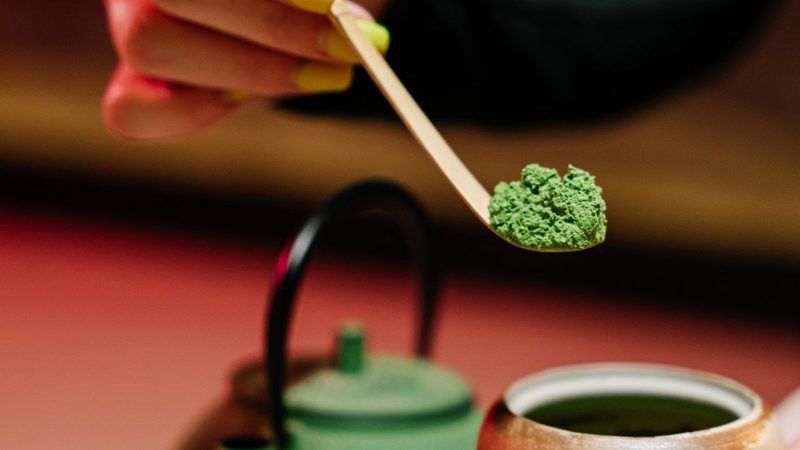
Note the third item in that list. Tencha — the shaded leaf that matcha is ground from — is one of the four types the ministry names for Nara. This is a matcha region, not only a sencha one.
806, and a temple in Uda
Nara Prefecture's own account of Yamato-cha names a starting point.
In 806, seed brought back from Tang China by Kukai was sown at Buryu-ji, in what is now Uda. The prefecture names that temple as the origin of Yamato-cha.
That is one of the earliest dates attached to tea anywhere in Japan. It is also, I should say plainly, a tradition rather than a document — the ministry's own wording is that it is said to have begun then. Shiga makes a similar claim for the year before, and I will come to that on its own page.
Something else is worth noting: the research station. Nara set up a prefectural tea section in 1912, and it still runs today as the Yamato-cha Research Institute. A twelve-hundred-year-old growing tradition with a laboratory attached to it since the Meiji era.
Yamato is what the province was called before it was Nara, and by extension an old word for the country. Yamato-cha is therefore not quite the same as saying Nara tea.
And the line in the Uji definition
The definition settled by the Kyoto Prefectural Tea Industry Council in 2004 permits Uji tea to be made from leaf grown in Kyoto, Nara, Shiga or Mie, provided a Kyoto company refines it inside Kyoto. Nara is one of the four.
The proportions are not published, so I cannot tell you how much Nara leaf ends up in tea sold as Uji. What I can say is that the prefecture next door has, on paper, been part of the Uji name for over twenty years, and that almost nobody outside Japan has heard the word Yamato-cha.
Set the four side by side and the shape of it is clear enough.
| The four prefectures in the Uji definition | Known abroad as |
|---|---|
| Kyoto | Uji — the one I keep seeing |
| Mie | Rarely named |
| Nara | Rarely named |
| Shiga | Rarely named |
Nothing here is concealed. Kyoto published the rule; anyone can read it. But a reader holding a tin abroad is holding one name out of four.
What this means when you buy
Yamato-cha means Nara. It does not tell you which of the eight districts, and it does not tell you the type. Ask for the district if the seller knows it.
Nara makes tencha. If you find matcha labelled Yamato-cha, it is not a novelty — it is one of the four types the region has always made.
Highland tea behaves differently. Slow growth at 200 to 500 metres concentrates aroma. Brew it a little longer than you would a lowland sencha; the local advice is explicit about that.
→ The rest of this series: Uji, Nishio, Mori, Yame, Kagoshima, Ise and Shiga.
What I take from it
I keep arriving at the same conclusion from different directions. The names on Japanese tea are decisions, and most of them were made recently. Yame in 1925. Chiran in 2017. Uji's current rule in 2004. Nara folded eight districts into one at some point I have not been able to date.
What Nara adds is the other half of that. The tea here goes back to 806 by tradition and to 1912 by institution — and it is still the name, not the tea, that decides what reaches a shelf in London. Twelve hundred years of growing does not put a word on a tin. A committee does.
Frequently Asked Questions
What is Yamato-cha?
The collective name for tea from Nara Prefecture, grown mainly on the Yamato Highland at 200 to 500 metres. Sencha, kabusecha, tencha and bancha are all made there.
How old is tea growing in Nara?
By tradition it begins in 806, with seed sown at Buryu-ji in what is now Uda.
Can Nara tea be sold as Uji tea?
Yes. The 2004 definition permits leaf from Kyoto, Nara, Shiga or Mie, refined by a Kyoto company in Kyoto. The proportions are not disclosed.
What are the local names within Yamato-cha?
Tsukigase, Tawara, Yagyu, Yamazoe, Fukusumi, Tsuge, Muro and Oyodo.
Does Nara make matcha?
Yes — tencha is one of the four types the ministry lists for the region.
Sources: Ministry of Agriculture, Forestry and Fisheries, guide to traditional Japanese foods; Nara Prefecture; Yamato-cha Research Institute, Nara Prefecture; Nara Specialty Products Association; Kyoto Prefectural Tea Industry Council.