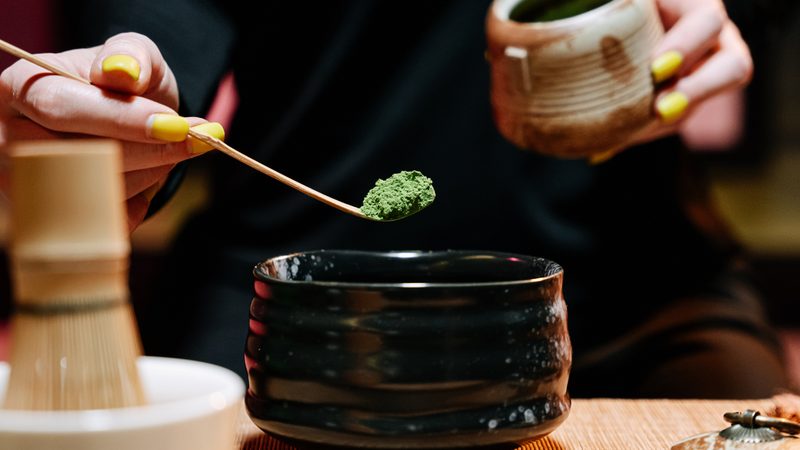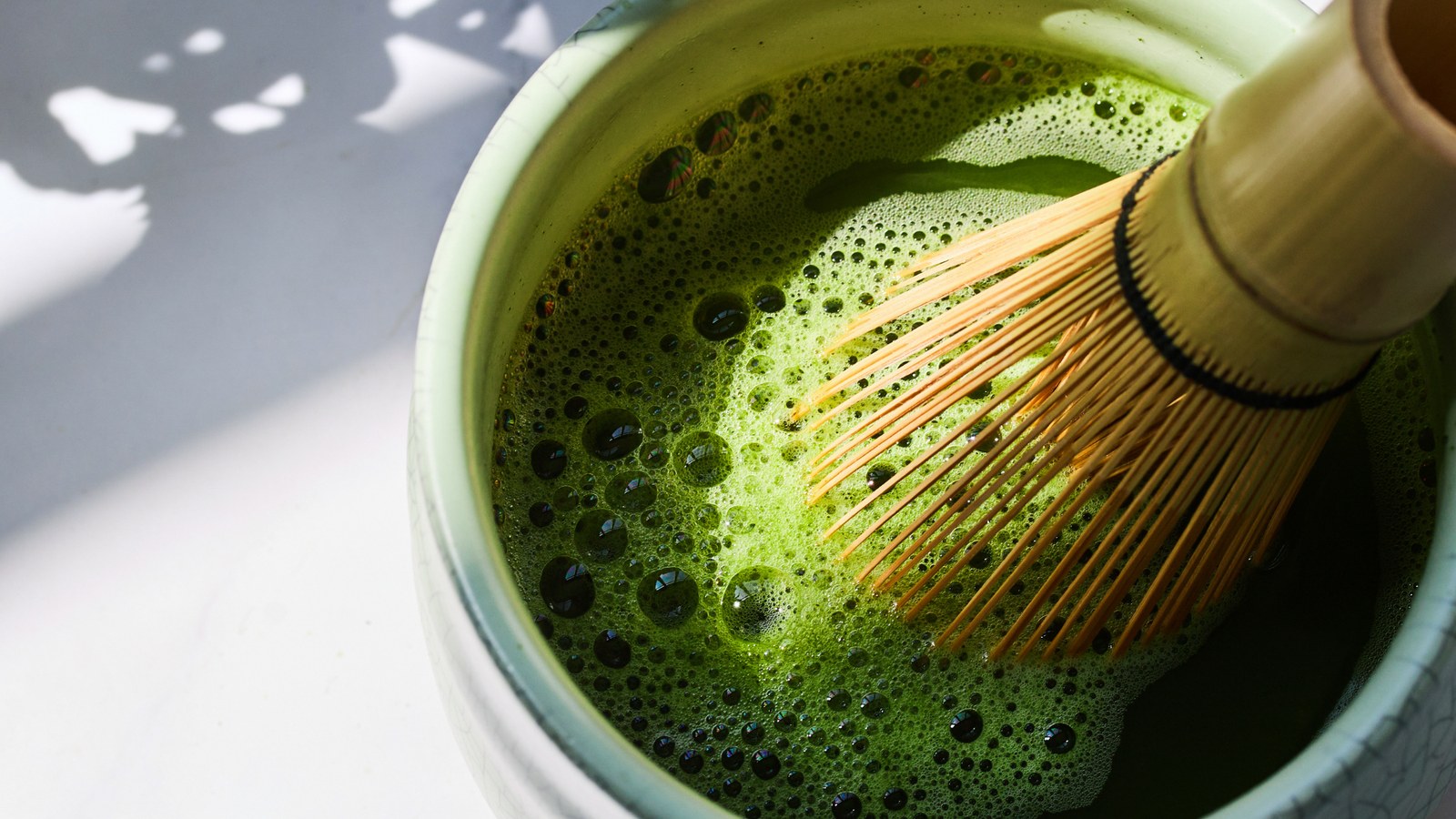
Los Angeles has more matcha than it has ever had. It is on the board at coffee shops in Echo Park and Highland Park, in Koreatown cream-top cafes, in Culver City and Silver Lake and Little Tokyo. Almost all of it is described the same way: ceremonial grade.
I am a licensed acupuncturist in Japan, and I have spent my working life around this tea. So let me say the unhelpful thing first. “Ceremonial grade” is not a protected term. No body issues it, no standard defines it, and nobody checks. It is a description a seller chooses to use. Some of the shops using it are pouring superb tea. Some are not. The phrase itself tells you almost nothing.
The test I use
Can the shop tell you where the tea comes from? Not the country. The region, and ideally the person who grew it. A shop that knows the answer has a relationship with a producer. A shop that doesn’t is buying from whoever had stock.
This matters more in 2026 than it did two years ago, because Japan has run short. Demand from outside the country has outgrown what Uji and Yame can pick. Kettl, who import directly and have shops in both Brooklyn and Los Feliz, put it plainly on their own site last year: Uji cannot keep pace with global demand. Websites crashed. Producers turned buyers away.
Time Out’s LA critic noticed the effect at the counter, and was honest about it: first-rate cafes are being forced to change suppliers, so a good matcha today may not be the same matcha in six months. That is exactly the risk you take at a shop that cannot name its farm. When supply tightens, a shop with a relationship keeps its tea. A shop without one takes what is left.
So this is not a ranking of taste. It is a ranking of transparency — six shops in Los Angeles, ordered by how much they are willing to tell you about the tea in the bowl. Every claim below comes from what each shop publishes itself.
1 · Tea Master — the one that publishes its farm visits
Little Tokyo · 450 E 2nd St, Los Angeles, CA 90012
Open since 2014, before any of this was fashionable, and still the most useful counter in the city. Founded by Daigoro Nakatomi and Alex Dwyer, who does something almost nobody else does: he goes to Japan, visits the farms, and writes it up.
The blog is called Where Tea Master Tea Comes From, and it names names. Hoshino Seichaen in Yame, Fukuoka — founded 1946, a gyokuro house. Osada-en in Shizuoka. Safety Re-Farm 88 in Odai, Mie, where some of Japan’s earliest organic tea farming was done. Their ceremonial Seihou is first-harvest leaf from Marukyu Koyamaen in Uji.
If you have read Japanese tea writing, those are not decorative names. They are producers a Japanese buyer would recognise. Publishing them is a commitment: you cannot quietly switch supplier when your customers know who your farmer is.
The shop itself is plain. A counter in Honda Plaza, whisked to order, soft serve that the neighbourhood has been eating for a decade. Prices are among the lowest of anywhere on this list. There is no theatre here at all, which is rather the point.
2 · Kettl — single cultivars, harvest by harvest
Los Feliz · 4677 Hollywood Blvd, Los Angeles, CA 90027
The West Coast shop of the Brooklyn importer, open since late 2024. Kettl buy directly and visit their producers several times a year, and their catalogue reads like a wine list: cultivar, producer, region, harvest year.
Uji Hikari from Yoshitsugu and Mizuho Furukawa, a husband-and-wife house in Gokasho, roughly the sixth generation making tencha under that name. Matcha from Takayuki Oyaizu in Shizuoka. A flagship made with Yamamasa Koyamaen, in Uji since 1861. Eight cultivars across the range — Saemidori, Samidori, Uji Hikari, Asahi, Gokou and others — and they will tell you which one you are drinking.
There is a four-seat tasting counter, by reservation, which is the only thing of its kind in Los Angeles: a guided flight with harvest dates and origin maps on the table. For a walk-in, the rotating ceremonial matcha is whisked to order alongside hojicha and sencha.
Kettl are also the reason the shortage is not a rumour. Their founder wrote about the 2025 harvest on their own blog — “Uji cannot keep pace with global demand” — and about looking to Kagoshima, Miyazaki and Mie rather than simply buying more of the same. That is a supply chain being managed in public, which is rare.
3 · Junbi — direct from Uji, at chain scale
City of Industry & West Covina · 18558 Gale Ave #106, City of Industry · 987 S Glendora Ave #2, West Covina
Founded in Pasadena, now a small California chain, and the only shop on this list that has managed volume without losing the thread. Junbi source their matcha directly from Uji, and the founders go to the farms themselves.
The drinks are unapologetically modern — strawberry matcha, yuzu dragonfruit — and that puts some people off. It shouldn’t. A flavoured drink built on tea you can trace is a completely different object from a flavoured drink built on powder from nowhere. The sweetness is a choice; the sourcing is a standard.
Worth knowing: the Westwood branch has closed, though several guides still list it. The two branches above are the ones east of the city.
4 · Maruwu Seicha — a Kyoto house that opened its own shop
Culver City · 9426 Washington Blvd, Culver City, CA 90232
Not an American cafe buying Japanese tea — a Japanese tea company that came over and opened a counter. Maruwu Seicha (丸宇製茶) are from Kyoto, with a shop in San Francisco’s Japantown and this one by the Culver Steps.
They publish the region — Uji, shade-grown, stone-ground in small batches — but not the individual grower, which is why they sit here rather than higher. Being the producer is a different kind of guarantee from naming one, and it is a real one; it is just less legible from the outside.
Order the plain matcha latte at half sweetness, which is what the counter will suggest if you ask. The Hokkaido milk soft serve is very good and turns any drink into a dessert, so decide in advance which you are having.
5 · Matcha Cafe Maiko — Kyoto supplier, soft serve counter
Monterey Park · 500 N Atlantic Blvd Ste 166, Monterey Park, CA 91754
A small chain, and easy to dismiss as a dessert counter — which it partly is. But they name Harimaen in Kyoto as their supplier, and that is more than most cafes on the “best of” lists manage.
The soft serve is what people come for. If you want to judge the tea itself, order the straight matcha and drink it before you order anything with milk in it. The bar here is lower than at Tea Master or Kettl, and the price reflects that.
6 · De Matcha & Yamari — the Torrance pair worth the drive
Torrance · 21540 Hawthorne Blvd #401C · 3525 W Carson St Ste 164
Two counters within a few minutes of each other in Torrance, which has the largest Japanese population in the county and, unsurprisingly, does this properly.
Neither publishes as much as the shops above, so I am listing them together and with a caveat: ask at the counter. In my experience shops in Japanese neighbourhoods usually know the answer perfectly well and simply never thought to put it on a website.
If you are in the South Bay, these are worth more of your time than the nearest coffee shop with matcha on the board.
What about all the coffee shops?
You will have noticed that some very well-reviewed places are missing. Stereoscope, Maru, Modu, GG, Picnic, Stagger, Rok — several of them make a matcha latte I would happily drink, and Stereoscope in particular does something almost nobody does, listing four Mizuba matcha by name with tasting charts.
They are absent because this guide is not about the best matcha latte in Los Angeles. It is about shops where tea is the point rather than an addition to a coffee programme. That is a difference of intent, not of quality, and if what you want is a good latte near your office, the city’s coffee guides will serve you better than I can.
How to judge a shop in thirty seconds
You do not need to memorise producers. Ask one question at the counter: “Where is your matcha from?”
A shop with a relationship answers immediately, and usually with a place name — Uji, Yame, Kagoshima. A shop without one says “Japan,” or “it’s ceremonial grade.” Neither answer is a lie. Only one of them is information.
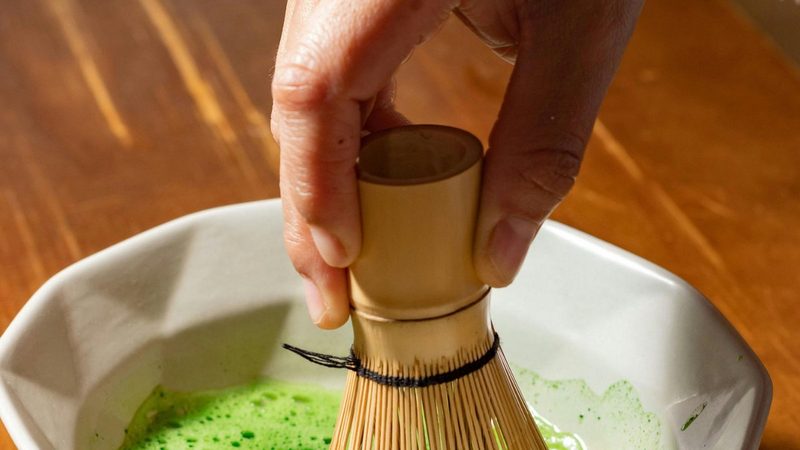
Two other things worth watching. Is it whisked to order, or poured from a jug? Pre-mixed matcha starts oxidising the moment it is made; within an hour it turns flat and slightly bitter. And how hot is the water? Matcha is whisked at 70–80°C, not boiling. Above that, the amino acids that make good tea taste sweet get overwhelmed by the catechins that make it taste sharp — which is where most of the “matcha is bitter” belief comes from.
One last thing
If a shop cannot tell you where its tea is from, that is not a scandal. It just means you are buying a drink rather than a tea. Both are fine. It helps to know which one you are doing.
Join me at the counter
Leave your email, and I'll send word whenever there's a new story to share over tea. No noise — just a good cup's worth, now and then.
A link is on its way to your email.
Open it, and you're in.
Every matcha specialist in Los Angeles, on one map
The six above are where I would start. But the full list of matcha and Japanese tea specialists in the city — sixteen of them at the time of writing, alongside twenty in New York — is on the Matcha Atlas. Coffee shops that happen to sell a matcha latte are not on it. That single rule is the whole map.