You have almost certainly seen Shigaraki ware without being told what it was. The round-bellied ceramic raccoon-dog standing outside restaurants all over Japan — the tanuki, with the straw hat and the sake flask — comes from here. It is the town's most famous export and it is the last thing this article is about.
Because Shigaraki has a far more interesting claim, and it is a claim no other Japanese kiln can make. Tea did not simply use Shigaraki. Tea told Shigaraki what to make.
→ Shigaraki is one of Japan's Six Ancient Kilns. For where clay sits among everything else you might buy, see the guide to Japanese tea ware.
It Began With Roof Tiles for a Palace That Lasted Three Years
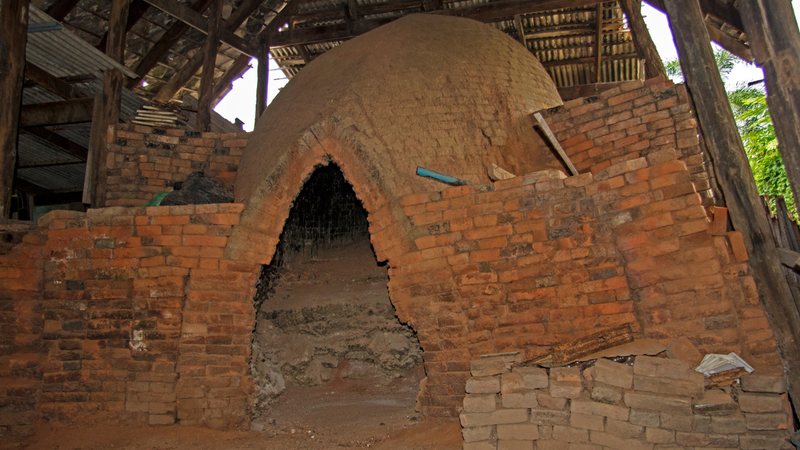
The usual account has Shigaraki starting in the eighth century, when the Emperor Shōmu began building a palace at Shigaraki and tiles were fired locally for its roofs. The palace was begun in 742, served briefly as the capital, and was abandoned within a few years.
The tiles are a nice origin story and should be treated as one — the tradition says it is said that, and so should we. What is not in dispute is that by the Kamakura period Shigaraki was producing the plain, useful things a farming region needs: water jars, seed jars, mortars. Heavy, unglazed, made to hold something.
That is worth holding on to, because it is what the tea masters came looking for.
First It Held the Tea. Then Tea Redesigned It.
Here is the sequence, and it is unusually well documented.
Early fifteenth century. Shigaraki jars are in use as containers for packing tea leaves. Not tea ware — storage. The town was making the strongest cheap jars in the region and tea was one of the things people put in them.
Sixteenth century. Shigaraki tea jars are being spoken of in the same breath as imported Chinese and Southeast Asian ones. A local storage vessel has become a thing connoisseurs compare.
Tenshō era, late sixteenth century. And then the reversal. Tea masters begin commissioning new forms from Shigaraki — shouldered tea caddies, flat water jars, jar-shaped water jars, cylindrical flower vases. Shapes that did not exist in Shigaraki before, made because someone who practised tea asked for them.
This is the century of Sen no Rikyū and the rise of wabi tea, and the timing is not coincidental. Tea was moving away from imported Chinese perfection and towards the rough, the plain, the local. Shigaraki was already rough, plain and local. It did not have to change what it was. It had to change what it made.
By the Edo period the town was firing the official tea jars used to carry new tea to the shogun. The pots that had once simply held leaves were now doing so ceremonially, by appointment.
Three Things to Look For
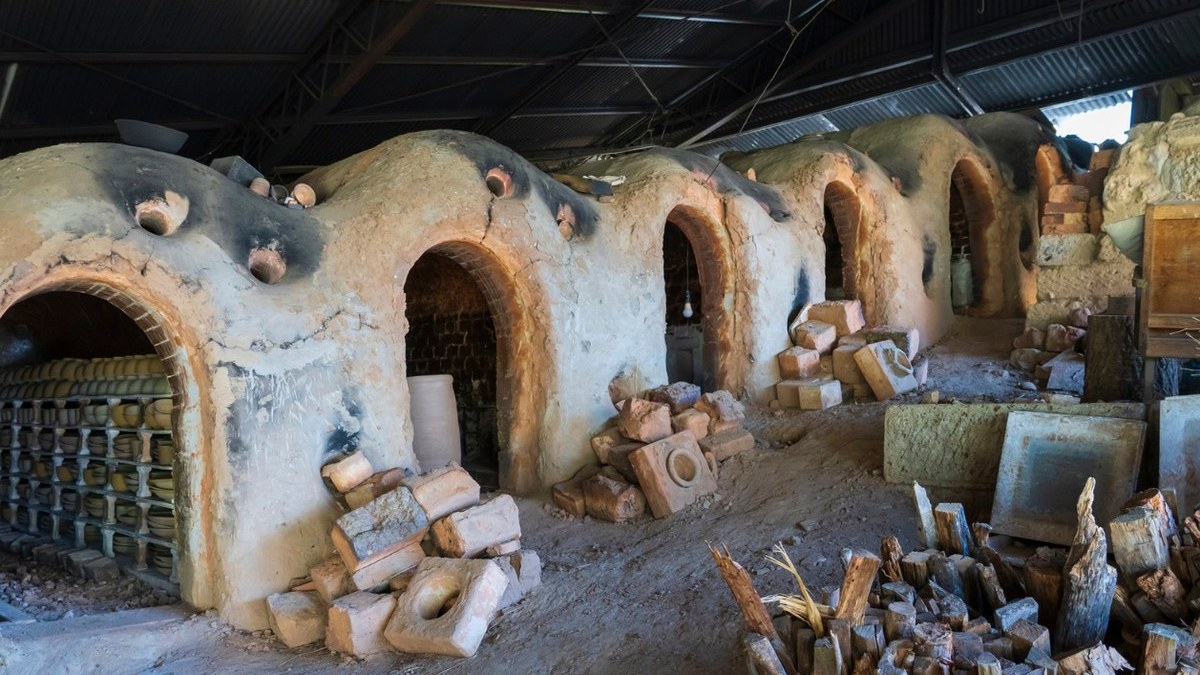
Potters in Shigaraki talk about a piece's keshiki — its scenery. Three effects make it, and all three come from the fire rather than from a brush.
The warm orange-red the clay turns where flame has touched it directly. It is the ground note of a Shigaraki piece and the reason the ware reads as warm even when the shape is severe.
Wood ash lands on the pot and melts with the feldspar in the clay itself, running down the surface in green-glass rivulets and pools. Nobody applied it. The kiln made a glaze out of the fuel and the body.
Where the base of a piece sits buried in ash and embers, it goes black-brown. The dark foot under a warm body is not a fault; it is the record of how the piece stood.
The three together are what Shigaraki people mean by the ware's plain beauty. None of them is decoration. All three are things that happened.
The Clay That Pushes Stones to the Surface
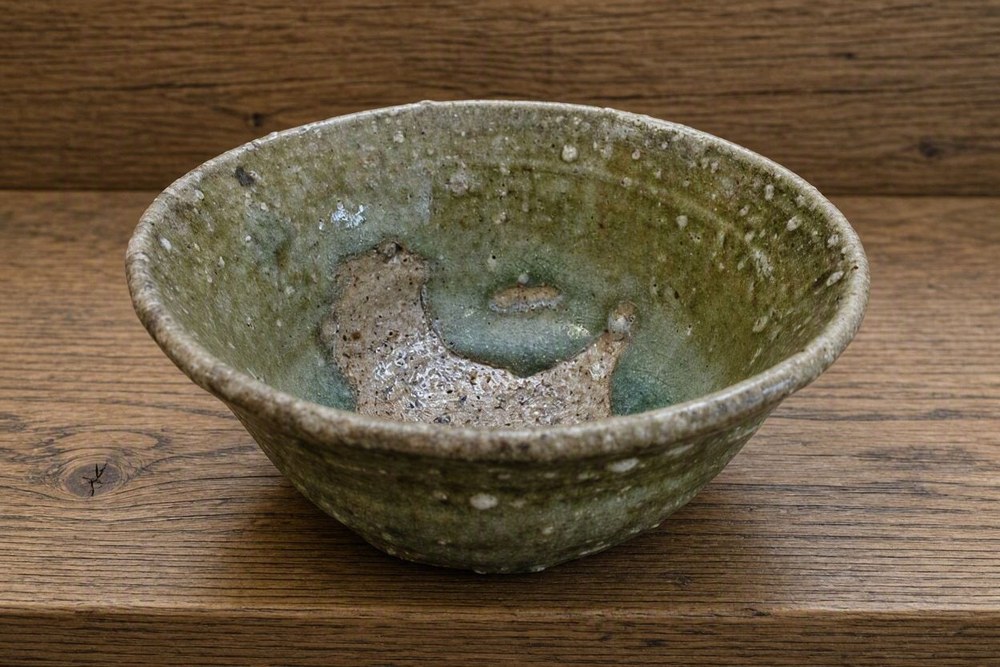
Shigaraki clay comes from the hills around the town, in Shiga prefecture near Lake Biwa, and it is coarse. It carries grains of feldspar and quartz, and at high temperature those grains push up through the surface and stand out as white specks, sometimes bursting the skin around them.
On most pottery this would be a defect. In Shigaraki it is the point — it is what gives a piece its grain, and it is a large part of why tea people in the sixteenth century wanted it.
The clay is also unusually refractory, meaning it holds its shape at temperatures that would slump other bodies. That is why Shigaraki makes things other towns cannot: not only cups and jars but garden basins, umbrella stands, architectural tile and sculpture over a metre tall.
The Century of the Brazier
The story most English accounts skip is what Shigaraki did in the twentieth century, and it is a strange one.
The town went into hibachi — the ceramic charcoal braziers that heated Japanese houses before central heating. It went in completely. By the late 1940s Shigaraki was producing around eighty per cent of every brazier in Japan, from some three hundred workshops.
Then houses got electric and kerosene heaters, and within about two decades that entire market disappeared.
What a town does at that point is the interesting part. Shigaraki did not shrink back to art pottery. It went sideways into everything its clay could still do: tiles, garden ware, planters, tableware, sculpture — and the tanuki, which by then had become a national fixture. The refractory clay that had made good braziers made good everything else.
What to Buy, and What It Is For
Here is where Shigaraki differs from the other two kilns covered on this site, and it is worth being direct about it.
Bizen is a cup you drink from. Tokoname is a pot you brew in. Shigaraki is mostly the thing that holds and surrounds. The water jar, the flower vase, the tea caddy, the basin. In a tea room it is rarely the vessel at your lips; it is the object at the edge of the mat that sets the tone of everything else.
So if you are buying:
A flower vase is the easiest way in. It is the form Shigaraki was asked for in the sixteenth century, it is still made, and one branch in it is enough.
A guinomi or a small cup if you want the texture in your hand. Look at the specks — the feldspar should stand proud of the surface, not be smoothed away.
Look at the foot before you look at the front. On a wood-fired piece, the dark koge at the base tells you it sat in the ash. On a piece fired in a modern electric kiln, it will not be there. Neither is wrong, but they are not the same object.
Frequently Asked Questions
What is Shigaraki ware?
Pottery from Shigaraki in Shiga prefecture, near Lake Biwa, and one of Japan's Six Ancient Kilns. Its clay is coarse and highly heat-resistant, carrying grains of feldspar and quartz that push through the surface during firing. It is best known abroad for the tanuki figures outside Japanese restaurants, and in Japan for tea ware, garden pieces and large sculpture.
Why is Shigaraki associated with the tea ceremony?
Because tea did not just adopt it — tea reshaped it. Shigaraki jars were being used to pack tea leaves by the early fifteenth century, and by the late sixteenth, tea masters were commissioning entirely new forms from the town: shouldered tea caddies, flat water jars, cylindrical flower vases. This was the era of wabi tea, which valued rough local surfaces over imported perfection, and Shigaraki was already rough and local.
What are hi-iro, bīdoro and koge?
The three surface effects Shigaraki potters look for, all made by the fire rather than applied. Hi-iro is the warm orange-red where flame touched the clay. Bīdoro is glassy green where wood ash melted together with feldspar in the body and ran down the surface. Koge is the dark scorching where the base sat buried in ash. Together they make what potters there call the piece's keshiki — its scenery.
Why are there white specks in Shigaraki pottery?
They are grains of feldspar and quartz in the local clay. At firing temperature they push up through the surface and stand out white, sometimes bursting the skin around them. On most pottery this would be a flaw; in Shigaraki it is the characteristic the ware is valued for, and it is part of why sixteenth-century tea masters wanted it.
Is Shigaraki good for drinking tea from?
It can be, but it is not what the town is best at. Shigaraki's tea forms are mostly the vessels that hold and surround — water jars, flower vases, tea caddies — rather than the cup at your lips. For a cup, Bizen suits better; for a teapot, Tokoname. A Shigaraki flower vase, on the other hand, is the single easiest way to put the ware to work.